You are about to hand a single piece of software the keys to your bank, your email, your work systems, and probably your kid's school portal. That is what a password manager is: a vault that concentrates your entire digital identity into one product built by a company you likely know almost nothing about. Most people pick one based on a review roundup, a discount code, or a friend's recommendation. Almost nobody checks who actually owns the thing.
That gap matters more than it used to. In 2023, LastPass confirmed that attackers exfiltrated encrypted vault data affecting millions of users, and the breach traced back through a chain of corporate and infrastructure decisions most customers never saw. Ownership churn is now routine in this category. Password managers get acquired by private equity firms, absorbed into ad-tech conglomerates, or quietly relicensed to holding companies in jurisdictions with weak data protection. The logo stays the same. The people reading your telemetry do not.
This guide walks through password manager ownership vetting the way I do it before I trust a vault with my own credentials. You'll learn how to trace corporate ownership, read the signals in a privacy policy, run a real telemetry test, and score candidates against each other using a repeatable checklist. No legal degree required.
Key Takeaways
- Ownership is a security feature. Who controls the company controls the update pipeline, the telemetry, and the encryption roadmap.
- Trace the entity, not the brand. Find the actual legal owner, its jurisdiction, and any parent company or PE backer before you commit.
- Read the privacy policy for the data-sharing clauses, not the marketing page. The words "affiliates," "successors," and "business transfer" are red flags worth investigating.
- Test the network behavior yourself. A vault that phones home to a dozen analytics domains tells you more than any trust badge.
- Prefer open-source, audited, self-hostable options when your threat model is serious, and verify the audit is recent and public.
- Have an exit plan. Confirm you can export in a standard format before ownership changes force your hand.
Why Password Manager Ownership Is a Security Problem, Not a Trivia Question
When you install a password manager, you are trusting a company on four separate fronts at once. Each one is an attack surface, and each one is shaped by who owns the business.
- The update channel. Whoever controls releases can push a compromised or telemetry-heavy build to your device. That is the same class of risk we've covered in how to detect a hijacked WordPress plugin update before it infects you.
- The encryption model. True zero-knowledge encryption means the vendor cannot read your vault even if compelled. A new owner can quietly weaken this in a future version.
- The telemetry pipeline. Metadata about which sites you log into, when, and from where is valuable to advertisers and hostile to your privacy.
- The legal jurisdiction. Where the owning entity is incorporated determines which governments can compel data and which data-protection laws apply.
Ownership sits underneath all four. A password manager built by a security-first team can become a data-harvesting product the day a marketing conglomerate buys it, and you'd never know from the app icon. This is why serious vetting starts with the corporate structure, not the feature list.
The concentration risk nobody talks about
A password manager is the highest-value single target in your digital life. Compromising it is more efficient than attacking every one of your accounts individually. That concentration is exactly why the ownership behind it deserves the same scrutiny you'd give a bank before wiring your savings there.
How to Trace Who Actually Owns Your Password Manager
The brand name on the website is rarely the legal entity that controls the software. Here is the trace I run, in order, and it usually takes under 30 minutes.
- Read the footer and legal pages first. Scroll to the bottom of the vendor's site. Look for a company name, registration number, and registered address in the Terms of Service, Privacy Policy, and Imprint. Note the exact legal name, not the trading name.
- Look up the company registry. Search the entity in the relevant registry: OpenCorporates for a broad view, Companies House for UK entities, the SEC EDGAR database for US public filings, or the local registrar for the stated jurisdiction. Confirm the entity exists and note its directors.
- Check for a parent company or acquisition. Search
"[product name] acquired by"and"[product name] parent company". Crunchbase and press releases will surface private equity buyers, holding companies, or conglomerate parents. - Run a WHOIS and DNS check. Look up the domain registration and the mail/analytics domains. A vault marketed as "based in Switzerland" whose infrastructure resolves entirely to a US ad network is worth a second look.
- Map the jurisdiction chain. Note where the app entity, the parent, and the data-processing servers each sit. Three different countries is common and not automatically bad, but each adds a legal actor who might compel data.
- Check the funding and business model. A free password manager with venture backing has to monetize somehow. If it isn't your subscription, it may be your metadata.
A worked example: tracing a mid-tier vault
Say you're evaluating a password manager called "VaultKey" that advertises "European privacy" on its homepage. You open the privacy policy and find the operating entity is "VaultKey Holdings Ltd." You look it up in a registry and see it was incorporated 18 months ago in a jurisdiction with no meaningful data-protection law, with a single director who also directs three ad-tech companies.
You then search the brand and find a press release: VaultKey was acquired by a marketing analytics group 11 months ago. A WHOIS check shows the sync servers resolve to that group's cloud account. The "European privacy" claim refers only to one optional server region. That is four independent signals pointing the same direction, and you now have a concrete reason to keep looking. That entire investigation cost you 25 minutes and no money.
Reading the Privacy Policy and Telemetry Like a Skeptic
Marketing pages say "zero-knowledge" and "we never see your data." The privacy policy is where the real terms live. Read it with a search function and hunt for specific clauses.
- "Affiliates" and "third parties." Find out exactly who your data can be shared with. Vague affiliate language is a way to legally share metadata across a corporate family.
- "Business transfer" or "successors." Almost every policy allows your data to transfer in an acquisition. Note whether they promise to notify you and honor the old terms.
- "Analytics" and "advertising partners." A true zero-knowledge vault has very little to analyze. A long list of ad partners contradicts the privacy pitch.
- Data retention windows. How long do they keep logs after you delete your account? "Indefinitely" is a red flag.
- Jurisdiction and governing law. The clause naming which country's courts govern disputes tells you who ultimately has leverage.
Verify the claims with a network test
Policies describe intent. Traffic reveals behavior. Do a hands-on telemetry test before you trust a vault, using the same discipline we apply in how to vet browser extensions before granting AI panel access.
- Install the app or extension in an isolated environment, ideally a throwaway virtual machine or a spare device.
- Route traffic through a monitoring proxy such as mitmproxy, or use your OS firewall's connection log.
- Open the app, unlock the vault, and perform normal actions: add an entry, autofill a login, sync.
- Record every domain the app contacts. Separate the sync endpoints from the analytics and advertising domains.
- Count the non-essential connections. A privacy-respecting vault should talk to its own sync server, a license check, and little else. A dozen third-party trackers is your answer.
If you want to keep a permanent notebook of these findings for every tool you audit, a self-hosted snippet and note tool like LionPaste keeps your telemetry logs and vetting checklists in one place instead of scattered across sticky notes.
Comparing Password Manager Ownership Models
Not all ownership structures carry the same risk. Here is how the common models compare on the factors that actually matter for vetting. The names are model types, not endorsements of specific products.
| Ownership Model | Encryption Verifiability | Telemetry Risk | Acquisition Risk | Exit / Data Portability |
|---|---|---|---|---|
| Open-source, self-hosted | High (auditable code, your server) | Very low | Low (you hold the data) | Excellent |
| Open-source, vendor-hosted | High (auditable client) | Low to moderate | Moderate (vendor can be bought) | Good |
| Closed-source, independent vendor | Moderate (audits only) | Moderate | Moderate to high | Varies |
| Closed-source, PE or conglomerate owned | Low (trust required) | High | Already realized | Often poor |
| Free product, ad-supported | Low | Very high | High | Poor |
The pattern is consistent: the more you can verify yourself, the less you have to trust the owner's good intentions. Open-source and self-hostable options move the trust from "the company promises" to "the code shows." That is the same philosophy behind the self-hosted security tools in our desktop utilities and web apps categories, where you keep control of the deployment.
A Repeatable Ownership Vetting Scorecard
Reviews go stale, but a scorecard gives you a consistent process. Score each candidate from 0 to 2 on each criterion, then compare totals. Anything scoring below half deserves a hard second look before it holds your credentials.
- Ownership transparency (0–2): Can you identify the legal entity and its owners in under 30 minutes? Clear and stable ownership scores
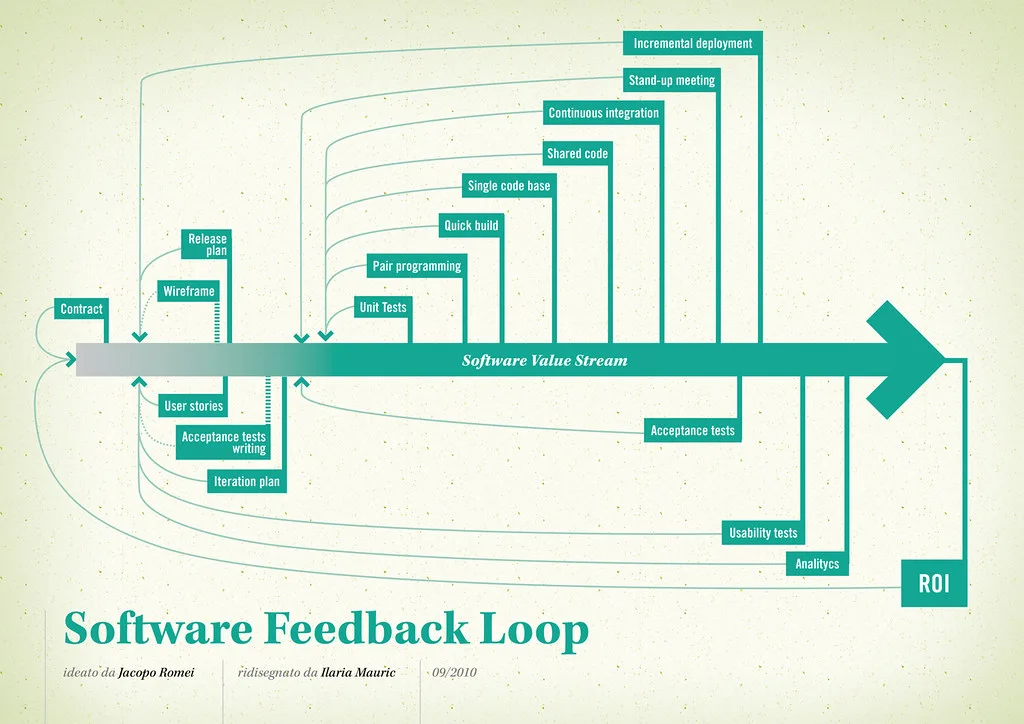
Cover image: Software value feedback loop by jakuza, licensed under BY-SA 2.0 via Openverse.