The new wave of AI-powered browser extensions is genuinely useful. They summarize pages, draft replies inside Gmail, rewrite code in the tab you're already looking at, and answer questions about whatever you're reading. But there's a catch most people skim past when they click "Add to Chrome": the AI panel almost always needs to see the page you're on. That means it can read your bank dashboard, your CRM, your internal admin panels, and anything else in an open tab.
Here's a stat that should make you pause. A 2023 review of the Chrome Web Store by researchers at Stanford and the CISPA Helmholtz Center found that hundreds of millions of installs traced back to extensions later flagged for malware, policy violations, or credential harvesting. Extensions with the "read and change all your data on websites you visit" permission are the single most abused category, and AI assistants request exactly that permission by design. The convenience is real, and so is the exposure.
This guide walks you through how to vet browser extensions for AI access before you hand over the keys to your browsing session. You'll learn what the permissions actually mean, a repeatable seven-step audit, a scoring comparison you can copy, and the specific red flags that separate a legitimate assistant from a data-harvesting one wearing an AI costume.
Key Takeaways
- The permission "read and change all your data on all websites" is the one that gives an AI panel access to your logged-in sessions. Treat it as the highest-risk grant.
- Check the publisher's identity, domain age, and privacy policy before installing, not after.
- Prefer extensions that send page content to a named model provider over ones that route through an anonymous proxy you can't audit.
- Use per-site activation and "on click" access instead of "on all sites" whenever the extension supports it.
- Re-audit installed extensions every quarter. Ownership changes and silent updates are the most common way a safe extension turns hostile.
- Isolate high-risk AI extensions in a separate browser profile that never touches banking or admin panels.
What "AI panel access" actually means in a browser
When you install an AI extension, the "panel" is the sidebar or popup where you chat with the assistant. For that panel to be useful, it usually reads the content of your active tab and sends it somewhere for processing. That "somewhere" is the crux of your risk.
There are three broad access models, and they carry very different risk profiles:
- Local-only processing: The extension runs a small model or does text extraction on your machine. Rare, but the safest. Nothing leaves your browser.
- Direct-to-provider: The extension sends page text to a named API such as OpenAI, Anthropic, or Google, often using your own API key. You can audit where the data goes.
- Proxy-relayed: The extension routes your content through the developer's own servers before it reaches a model. You have to trust an intermediary you can't inspect, and they can log everything.
The proxy model isn't automatically malicious, plenty of good products use it to manage billing and rate limits. But it's the model where a bad actor can quietly siphon everything you read. That's why the vetting steps below focus so heavily on who is on the other end of the pipe.
The permissions that matter most
When Chrome or Edge shows you the permission prompt, these are the three phrases to slow down on:
Read and change all your data on all websites— the AI can see every logged-in session. Highest risk.Read your browsing history— lets it build a profile of everywhere you go, not just where you use it.Manage your downloadsorCommunicate with cooperating websites— often benign, but worth a second look on an unknown publisher.
The 7-step process to vet browser extensions for AI access
This is the routine I run before any AI extension touches my main profile. It takes about ten minutes and has killed several installs before they started.
- Identify the real publisher. On the store listing, click the developer name. Legitimate companies link to a real website with a physical address and a company name you can look up. If the "developer" is a Gmail address or a name with zero web presence, stop. The techniques in our guide on auditing software vendor ownership before you buy apply directly here.
- Read the privacy policy for the data pipeline. Search the policy for the words "page content," "third party," "sell," and "retain." You want an explicit statement of what is sent, where, and how long it's kept. Vague policies are a red flag.
- Check the permissions against the promised feature. A tool that only summarizes the current article does not need history access or the ability to run on all sites in the background. Mismatch between stated function and requested power is the classic tell.
- Inspect the review pattern. Look past the star average. A cluster of five-star reviews all posted in the same week, in similar broken English, signals purchased reviews. Read the one- and two-star reviews for mentions of "spam," "redirects," or "changed after update."
- Verify update history and ownership stability. An extension that changed hands recently is exactly how legitimate tools get weaponized. This is the same failure mode we documented in detecting a hijacked plugin update before it infects you — a trusted product gets sold, and the new owner ships a malicious update to an existing install base.
- Test in an isolated profile first. Create a fresh browser profile with no logged-in accounts. Install the extension there, watch its network activity in DevTools (open the Network tab, use the AI panel, and see which domains it contacts), and confirm it only talks to the endpoints its privacy policy names.
- Set the narrowest access it will accept. In
chrome://extensions, click Details and change "Site access" from "On all sites" to "On click" or a specific allowlist. If the extension breaks entirely when restricted, that tells you how much it wanted the broad grant.
A worked example: vetting a fictional "SummarizeAI" extension
Say you find an extension called SummarizeAI with 200,000 users and a 4.6 rating. Tempting. Here's the ten-minute audit in numbers:
- Publisher check: Developer links to a two-page site registered
47 days agovia a privacy-shielded WHOIS record. Score: -2. - Privacy policy: Says data is sent to "our AI partners" with no provider named and a "we may retain content to improve our services" clause. Score: -2.
- Permissions vs feature: Requests history access despite only summarizing the current tab. Score: -3.
- Reviews: 180 five-star reviews posted in a single 3-day window last month. Score: -2.
- Network test: In DevTools, the panel POSTs your page text to
analytics-collector[.]xyz, a domain that appears nowhere in the policy. Score: -5.
Total: -14. Every single signal points the same direction. The 200,000 users and 4.6 rating meant nothing once the network tab showed page content going to an undisclosed collector. You'd uninstall before you ever logged into anything.
Comparing AI extension access models
Not every trade-off is a deal-breaker. Here's how the common architectures stack up on the criteria that actually predict risk. Use it to score anything you're considering.
| Criterion | Local-only | Direct-to-provider (your key) | Proxy-relayed (vendor servers) | Unknown / opaque |
|---|---|---|---|---|
| Where page data goes | Nowhere | Named API you control | Vendor, then model | Unclear |
| Auditable in DevTools | N/A | Yes | Partial | No |
| Retention transparency | High | High | Medium | Low |
| Risk if publisher turns hostile | Low | Low | High | Severe |
| Setup effort | Medium | Medium | Low | Low |
| Recommended for admin/banking tabs | Yes | With allowlist | No | Never |
The pattern is clear: the models that require slightly more setup effort are the ones that keep you safe. An extension that uses your own API key is, counterintuitively, often the more trustworthy choice because the data path is yours to inspect.
Red flags that should end the evaluation immediately
Some findings mean you close the tab and move on, no matter how good the reviews look:
- Undisclosed network destinations. If your page text goes anywhere the privacy policy doesn't name, that's exfiltration until proven otherwise.
- Recent silent ownership change with a spike in permissions. Update notes that suddenly add "read history" to a tool that never needed it.
- Obfuscated or minified background scripts that call
eval()on remote code. Legitimate AI extensions don't need to execute code fetched at runtime. - A privacy policy that reserves the right to "sell" or "share for marketing" your page content. There is no version of this that's acceptable for a tool reading your logged-in sessions.
- No support channel. A real vendor has a way to reach them. This is one reason we take our own support and contact visibility seriously, and why you should expect the same from anyone handling your data.
If you've done this dance with OAuth apps, the instinct is identical. The same discipline in our walkthrough on auditing OAuth app grants before they become a breach maps almost one-to-one onto browser extensions: enumerate what has access, question why, and revoke what you can't justify.
Building an ongoing hygiene routine, not a one-time check
The dangerous myth is that vetting is a moment. It's a schedule. Extensions update automatically, ownership changes qu
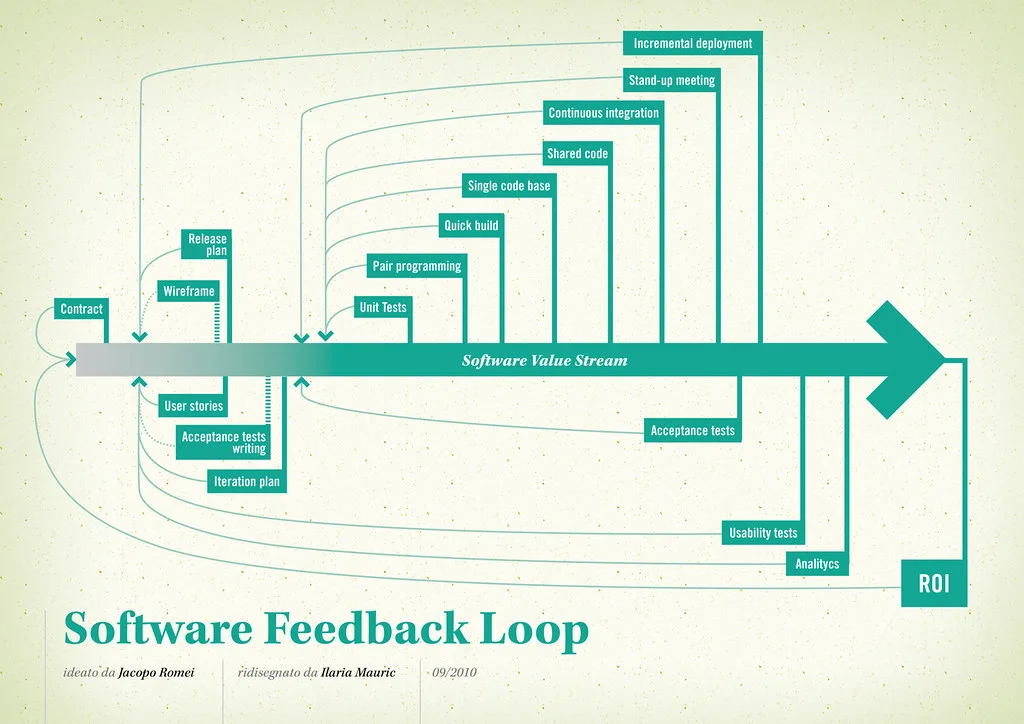
Cover image: Software value feedback loop by jakuza, licensed under BY-SA 2.0 via Openverse.