You found the perfect tool. It solves your exact problem, the demo looks slick, the price is reasonable, and there's a "Buy Now" button glowing at you. So you buy it. Six months later the company gets acquired, the product goes into "maintenance mode," your data ends up in a jurisdiction you never agreed to, and support stops answering. This is not a rare horror story. It is the default outcome of buying software without knowing who is actually behind it.
Here's a number that surprises most buyers: according to research on venture-backed startups, roughly 75% fail, and a significant chunk of B2B SaaS acquisitions result in the acquired product being sunset within two to three years. When you buy software, you are not really buying features. You are entering a multi-year relationship with an organization whose incentives, financial health, and ownership structure you probably never examined.
This guide walks you through a practical software vendor ownership audit: how to find out who really owns a product, where the company is registered, who has access to your data, and whether the outfit will still exist when you need a critical patch. You'll get a repeatable checklist, a worked example with real steps, a comparison of vendor types, and answers to the questions people actually search for.
Key Takeaways
- Ownership is a risk factor, not a formality. Who controls a product determines its roadmap, data handling, and lifespan.
- Trace the legal entity first. Corporate registration, jurisdiction, and parent company reveal more than any marketing page.
- Follow the money. Funding rounds, acquisitions, and revenue model tell you whether the vendor is stable or about to pivot.
- Read the data processing agreement, not just the privacy policy. Sub-processors and data residency are where surprises hide.
- Favor transparent vendors. A named company, a real address, and honest documentation beat an anonymous "team" every time.
- Document your audit. A one-page vendor file saves you during renewals, audits, and incidents.
Why Software Vendor Ownership Matters More Than the Feature List
Features are the easy part. Any competent developer can replicate a feature. What you can't replicate is trust, continuity, and accountability, and all three flow directly from ownership.
Consider what ownership actually controls:
- The roadmap. A founder-owned tool and a private-equity-owned tool make very different decisions. PE owners often cut costs, raise prices, and reduce support headcount to hit margin targets.
- Your data. The company that owns the product decides where your data lives, who processes it, and what happens to it in a sale. Data is frequently the most valuable asset transferred in an acquisition.
- Legal recourse. If something goes wrong, you need to know which legal entity you're dealing with and in which jurisdiction. "A guy on the internet" is not a party you can hold accountable.
- Longevity. An undercapitalized startup with 14 months of runway is a different bet than a profitable company with a decade of history.
This is the same logic behind vetting other kinds of software supply chain. If you've read our guide on how to vet a password manager's ownership before you trust it, you already know the principle: the more sensitive the tool, the deeper you dig.
What a Software Vendor Ownership Audit Actually Covers
An ownership audit is a structured investigation into who controls a software product and whether they can be trusted with your money, your data, and your operational dependency. It breaks into five layers.
1. The legal entity
Every legitimate vendor operates under a registered company. You want its full legal name, registration number, country of incorporation, and registered address. A product page that names a real entity, such as LionScripts being operated by eDarpan Tech Private Limited, is a green flag. A product with no company name anywhere is a yellow-to-red flag.
2. The ownership chain
Is the company independent, or is it a subsidiary? Who are the shareholders or parent companies? Acquisitions change everything, and buyers often don't announce them loudly.
3. The financial picture
Bootstrapped and profitable, venture-funded and burning cash, or PE-owned and margin-squeezing? Each has predictable consequences for pricing and support.
4. Data control and sub-processors
Who physically stores and processes your data? Many "vendors" are thin front-ends over AWS, third-party analytics, and offshore support contractors.
5. The track record
How long have they operated? What's their history with previous products, shutdowns, and price changes? A vendor that has sunset three products in five years tells you something.
A Step-by-Step Vendor Ownership Audit Walkthrough
Here's a concrete, repeatable process. Budget 30 to 60 minutes per vendor for anything you'll depend on operationally.
- Find the legal entity. Scroll to the footer of the vendor's website. Check the
/about,/terms,/privacy, and/imprintpages. You're looking for a full company name and address. If you only find a first name and a Gmail address, stop and reconsider. - Verify registration in the corporate registry. Use the appropriate government database. For US companies, search the Secretary of State registry for the state named. For UK, use Companies House. For India, the Ministry of Corporate Affairs (MCA) portal. For the EU, national business registers. Confirm the company exists, is active (not "dissolved" or "struck off"), and matches the name on the site.
- Map the ownership chain. On the corporate registry, look at directors and shareholders. Cross-reference with news via a search like
"[Company Name]" acquired OR acquisition OR funding. Check Crunchbase or PitchBook for funding history. Note the parent company if one exists. - Assess financial stability. Look for signs: a paid product with real revenue is more stable than a free tool searching for a business model. Check for recent layoff news, "we're winding down" blog posts, or a pricing page that suddenly tripled.
- Read the Data Processing Agreement (DPA). Find the list of sub-processors. This tells you where your data actually goes. Note the data residency (which country/region) and whether it complies with your obligations (GDPR, HIPAA, etc.).
- Check the operational history. Look at the Wayback Machine (web.archive.org) for the product page over the last 2 to 4 years. Consistent presence and steady updates are good. A page that appeared six weeks ago selling a "5-year-old platform" is a mismatch worth questioning.
- Verify support is real. Send a pre-sales question through their support channel and time the response. A vendor that answers a genuine technical question within a business day is signaling that a human is on the other end.
- Document it. Save a one-page file: legal entity, jurisdiction, ownership, key sub-processors, support responsiveness, and your risk rating. You'll thank yourself at renewal time.
A Worked Example: Auditing Two Competing Plugins
Say you run an e-commerce store and you need to block malicious IP ranges hammering your login page. You've narrowed it down to two options: a well-documented commercial plugin and a "free" GitHub project with 200 stars. Let's audit both.
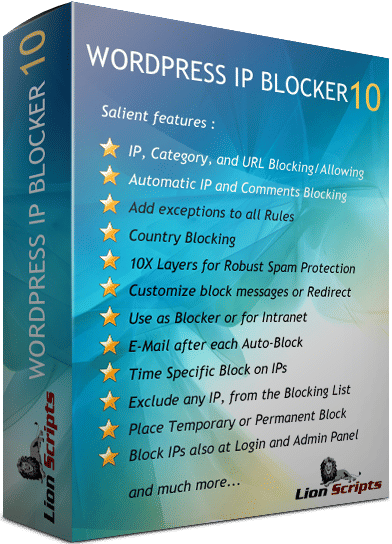
Option A — the commercial plugin. Take something like WordPress IP Blocker Pro. In under ten minutes you can confirm: it's sold through a named marketplace, operated by a registered private limited company, with a stated support channel and documented update history. You know exactly who to email and who is legally responsible. Risk rating: low.
Option B — the free GitHub project. You check the repo. Last commit was 14 months ago. The maintainer is a single pseudonymous account. There's no DPA because there's no company. Two open security issues sit unanswered. It might work perfectly today. But if a vulnerability appears next month, there is no one obligated to fix it, and no entity to hold accountable. Risk rating: high for a login-security dependency.
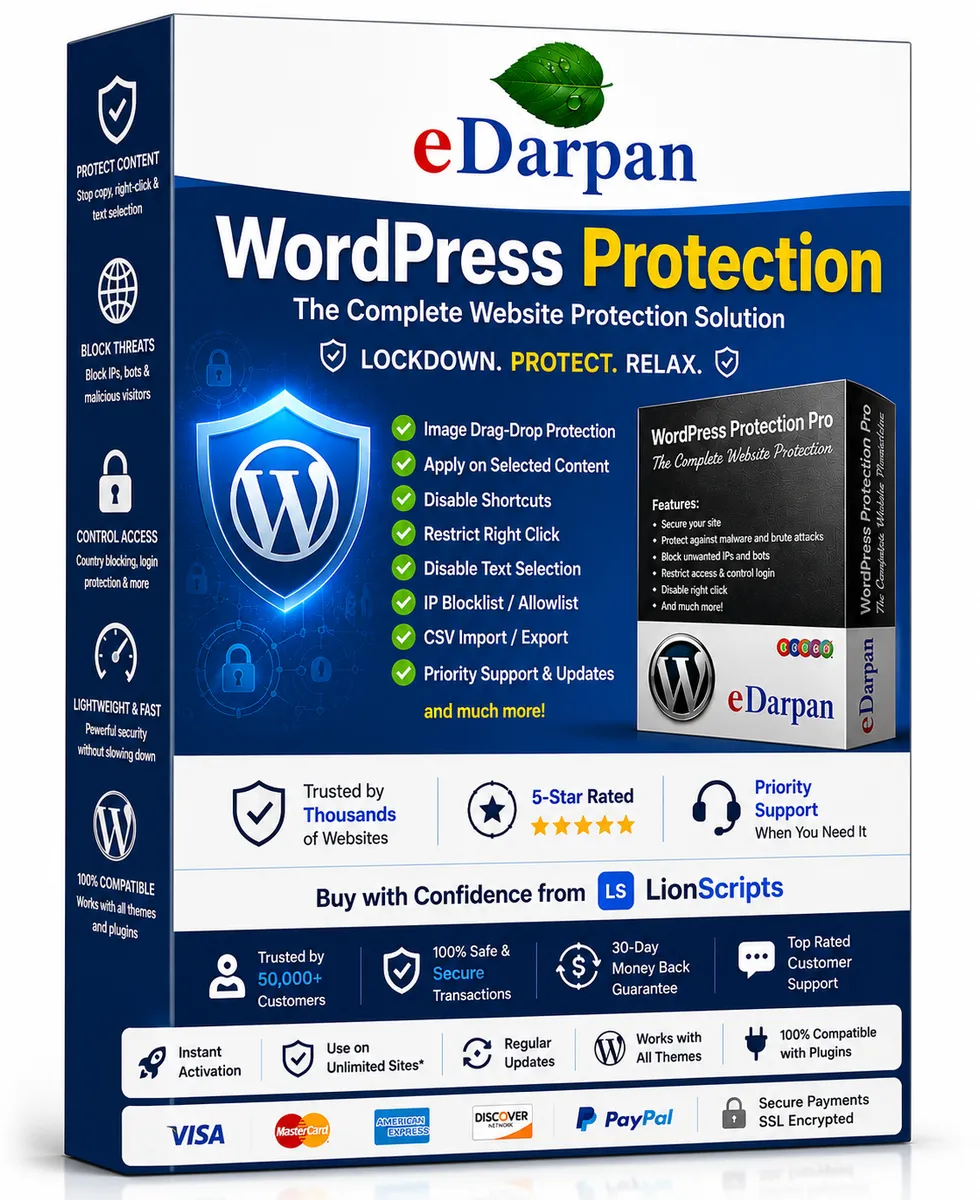
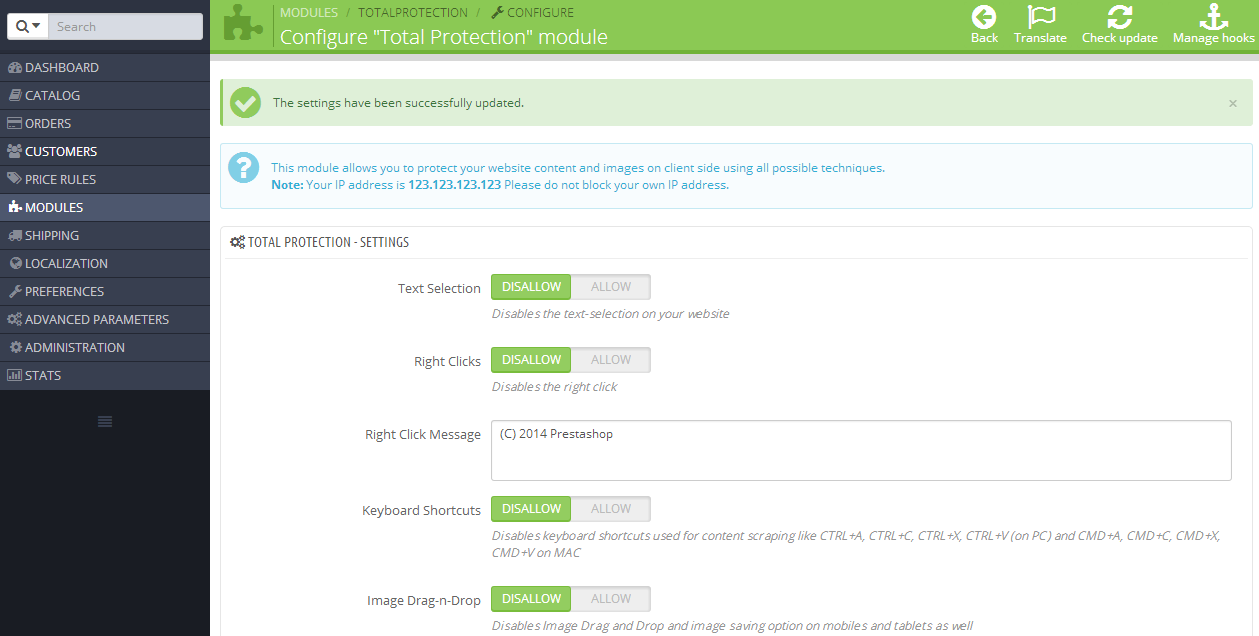
Here's the numbers-based decision. Suppose the commercial plugin costs $49/year and the free one costs $0. If a single unpatched exploit leads to four hours of incident response at $75/hour, that's $300 in cleanup, before counting downtime or lost sales. The "free" tool becomes the expensive one the first time it fails. For anything touching security, the ownership-backed option almost always wins the true-cost comparison. The same reasoning applies when you evaluate broader defenses like eDarpan WordPress Protection or store-focused hardening with Prestashop Total Protection Pro.
Vendor Types Compared: Who Are You Really Buying From?
Not all vendors carry the same ownership risk. Here's how the common types stack up on the criteria that matter for an ownership audit.
| Vendor Type | Accountability | Longevity Risk | Price Stability | Data Transparency |
|---|---|---|---|---|
| Established commercial marketplace | High (named entity) | Low | Predictable | Usually documented |
| VC-funded startup | Medium | Medium-High | Can spike after raises | Often good early on |
| PE-owned SaaS | Medium | Low-Medium | Tends to rise | Varies widely |
| Solo indie developer | Depends on the person | High | Stable but fragile | Rarely formal |
| Anonymous / pseudonymous | None | Very High | Unknown | None |
The takeaway is not "avoid indie developers." Some of the best tools are built by one committed person. The takeaway is to match the risk to the dependency. A one-off calculator utility or an offline games collection carries almost no ownership risk because it doesn't touch your data or your uptime. A tool that sits in your payment flow or holds your customer database deserves the full audit.
Cover image: Residential Real Estate Lawyers by sanchodania, licensed under PDM 1.0 via Openverse.