If you manage more than one machine, you have lived this pain: a fresh laptop, a long afternoon, and the slow ritual of hunting down installers one website at a time. Download VLC. Click through the installer. Decline the toolbar. Repeat for Git, Node, 7-Zip, and twenty other tools. By the time you are productive, half a day is gone.
Package managers were supposed to fix this, and on Linux they largely did. But the cross-platform story is messier. Here is a number that surprised me when I started timing it: setting up a developer workstation by hand takes most people three to five hours. With a tuned package manager and a saved manifest, I can rebuild the same machine in under 20 minutes, mostly unattended. That is the gap we are talking about.
This article compares the three tools that actually matter in 2024 for Windows and macOS users: Winget, Homebrew (Brew), and Scoop. I use all three weekly. We will cover what each one is good at, where each one quietly frustrates you, a side-by-side comparison table, a real automation walkthrough, and how to keep your installs secure when you start trusting a manager to fetch software for you.
Key Takeaways
- Winget ships with Windows 10/11, is the default choice for mainstream GUI apps, and is the easiest to start with.
- Scoop is the power-user's Windows tool: portable, no UAC prompts, clean isolation, ideal for CLI utilities and dev environments.
- Homebrew remains the king on macOS and is genuinely usable on Linux too, with the largest curated catalog of the three.
- None of these is truly "cross-platform" alone. The real win is a consistent workflow: one manifest file, one command, every machine identical.
- Always verify what you are installing. A package manager fetches binaries from the internet, so treat sources like you would any other supply-chain risk.
- Export your install list now. A saved manifest turns a half-day rebuild into a coffee-break rebuild.
What Are Cross-Platform Package Managers, Really?
A package manager is a tool that installs, updates, and removes software from the command line, pulling from a known repository or manifest. Instead of visiting a website, you type one command and the tool handles the download, the install, and (usually) the path setup.
The phrase cross-platform package managers is slightly aspirational. In practice, no single manager is the best option on every OS. What you actually build is a cross-platform habit: you keep a list of the software you need, and on each machine you let the locally appropriate manager do the heavy lifting.
Three core concepts you will see across all of them:
- Repository / bucket / tap: the catalog of available software. Winget calls it the "source," Scoop calls it a "bucket," Homebrew calls it a "tap."
- Manifest: a file describing what to install. This is what makes reproducible setups possible.
- Upgrade command: the single command that updates everything at once, which is where the time savings really live.
Winget: The Default Windows Choice
Winget is Microsoft's official package manager, bundled with the App Installer on Windows 10 and 11. If you have a recent Windows machine, you almost certainly already have it. Open a terminal and run winget --version to check.
What Winget does well
- Zero setup. It is already there. No bootstrapping, no script to paste.
- Mainstream coverage. Chrome, Zoom, Slack, Steam, Visual Studio Code, and most desktop apps people actually want.
- Microsoft Store integration. It can install Store apps alongside traditional installers.
- Export and import.
winget export -o apps.jsondumps your installed apps to a manifest you can replay on another machine.
Where Winget frustrates
- It triggers UAC elevation prompts for many packages, which breaks unattended scripting.
- Upgrade reliability is inconsistent. Some apps report a version Winget cannot match, so they linger as "available" forever.
- The CLI is verbose. Expect to read more output than you want.
A typical session looks like this:
- Search:
winget search "visual studio code" - Install:
winget install Microsoft.VisualStudioCode - Upgrade everything:
winget upgrade --all
For most people setting up a single Windows PC with familiar apps, Winget is the right first stop. It is the lowest-effort path to a working machine, and you can graduate to the other tools when you hit its limits.
Scoop: The Power User's Windows Manager
Scoop is a community-built Windows package manager with a very different philosophy. Where Winget mirrors traditional installers, Scoop favors portable installs dropped into your user profile, with almost no system-level changes and no UAC prompts. That alone makes it the better tool for scripting and for locked-down corporate machines.
Why developers love Scoop
- No admin rights needed for most packages. Everything installs under
~/scoop. - Clean uninstalls. Apps are isolated, so removing one rarely leaves debris.
- Version pinning and rollback. Scoop keeps old versions, so you can
scoop resetto a prior build. - Excellent for CLI tools:
git,jq,ripgrep,nodejs,python, and friends.
The tradeoff is that Scoop is less suited to big GUI applications and requires a one-time setup. Installing it takes two PowerShell commands and about 30 seconds. After that, adding the "extras" bucket unlocks most desktop apps you will care about.
Getting started with Scoop
- Open PowerShell and allow scripts:
Set-ExecutionPolicy -ExecutionPolicy RemoteSigned -Scope CurrentUser - Install:
irm get.scoop.sh | iex - Add the extras bucket:
scoop bucket add extras - Install a tool:
scoop install ripgrep - Update everything:
scoop update *
If you work heavily with the file system, Scoop pairs nicely with focused utilities. I keep a tool like Windows Symlink Creator Pro handy for redirecting large app data folders onto a second drive without breaking Scoop's portable layout. You can browse more options in the desktop utilities and Windows software categories.
Homebrew: The macOS Standard That Crossed Over
Homebrew started life as the de facto macOS package manager and has since become genuinely usable on Linux too. On a Mac, it is effectively mandatory: the open-source catalog (called formulae) plus the GUI app catalog (called casks) covers almost everything.
Homebrew strengths
- Largest curated catalog of the three, with formulae for nearly every command-line tool and casks for the major desktop apps.
- Bundle support. A single
Brewfiledescribes your entire setup and reinstalls it withbrew bundle. - Active maintenance. Packages update quickly, and the project is well documented.
- Runs on Linux via Homebrew on Linux, giving you one workflow across Mac and Linux machines.
Homebrew weaknesses
- No native Windows support. WSL is your only path on Windows, and at that point Winget/Scoop are simpler.
- Upgrades can pull in large dependency chains and occasionally break things.
- Install times can be long when a formula compiles from source.
A minimal Mac setup with Homebrew:
- Install Homebrew:
/bin/bash -c "$(curl -fsSL https://raw.githubusercontent.com/Homebrew/install/HEAD/install.sh)" - Install a CLI tool:
brew install git - Install a GUI app:
brew install --cask visual-studio-code - Save your setup:
brew bundle dump --file=~/Brewfile - Update everything:
brew update && brew upgrade
Winget vs Brew vs Scoop: The Comparison Table
Here is how the three stack up on the criteria that actually change your day-to-day experience.
| Criteria | Winget | Scoop | Homebrew |
|---|---|---|---|
| Primary OS | Windows 10/11 | Windows 10/11 | macOS & Linux |
| Setup effort | None (pre-installed) | ~30 seconds | ~2-5 minutes |
| Needs admin rights | Often (UAC prompts) | Rarely | No (per-user) |
| Catalog size | Large (mainstream) | Medium (dev-focused) | Largest |
| Manifest / reproducible setup | export/import JSON |
Exportable app list | Brewfile (best in class) |
| Best for | Everyday GUI apps | CLI tools, locked-down PCs | Macs and Mac+Linux teams |
The honest summary: on Windows, use Winget for everyday apps and Scoop for developer tooling. On macOS, use Homebrew and stop overthinking it. If your team spans Mac and Linux, Homebrew gives you the closest thing to a single workflow.
A Worked Example: Rebuilding a Dev Machine in Under
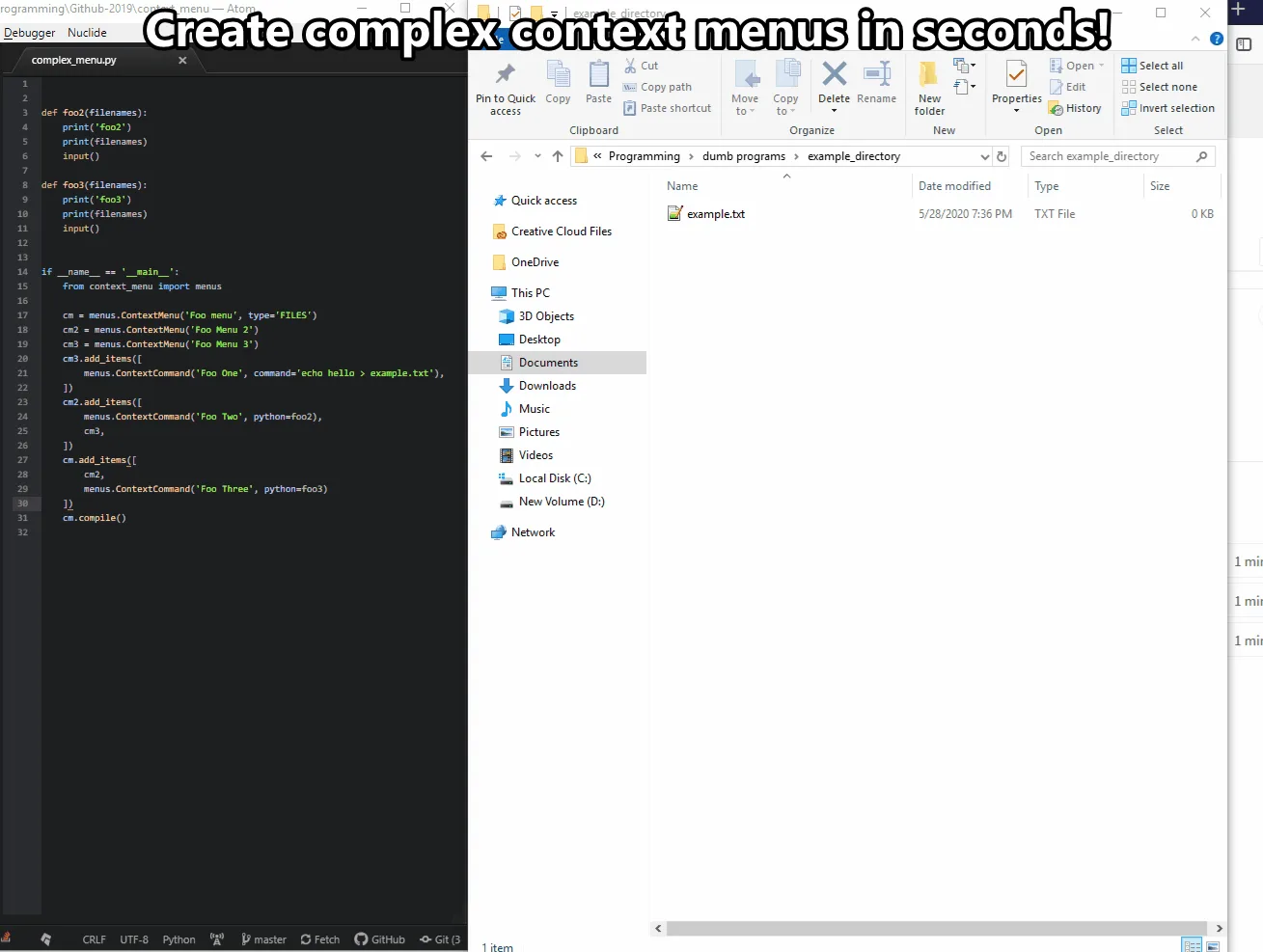
Cover image: (Python Library) context menu by Saleguas, licensed under BY-SA 4.0 via Openverse.