WooCommerce runs somewhere north of 6 million active online stores, which is a staggering share of the web's ecommerce. That popularity is exactly what makes it a target. The core WooCommerce plugin is battle-tested and audited constantly, but the average store I audit is running 24 to 38 additional plugins on top of it. Payment gateways, shipping calculators, abandoned-cart recovery, a slider from 2019 nobody remembers installing. Every one of those is an attack surface, and most site takeovers I investigate don't start with WooCommerce itself. They start with a neglected add-on.
Here's the uncomfortable statistic: according to multiple WordPress vulnerability trackers, plugins account for roughly 90 to 95 percent of all reported WordPress security flaws, and a large chunk of those affect ecommerce-adjacent plugins because they handle money, customer PII, and elevated permissions. When an attacker chains a plugin vulnerability into a site takeover, they don't just deface your homepage. They skim card numbers, inject fake payment forms, and add hidden admin accounts you won't notice for weeks.
This guide walks through how I actually harden WooCommerce stores against takeover attacks, from the audit I run before installing anything to the runtime defenses that catch the exploit you didn't see coming. Expect concrete steps, a worked example with real numbers, and honest tradeoffs. This is woocommerce plugin security the way a practitioner does it, not a vendor checklist.
Key Takeaways
- Most WooCommerce site takeovers begin with a vulnerable third-party plugin, not core WooCommerce.
- Vet every plugin before install: check update cadence, active installs, code quality, and disclosed CVEs.
- Enforce least privilege — no plugin or user should hold more capability than it needs.
- Layer defenses: a firewall, file integrity monitoring, and IP-level blocking catch what patching misses.
- Automate updates for low-risk plugins, but stage and test high-risk ones before deploying.
- Assume compromise is possible: keep tested backups and a rollback plan you've actually rehearsed.
Why WooCommerce Plugins Are a Prime Takeover Target
A "site takeover" means an attacker gains persistent control — usually by creating a rogue administrator account, uploading a web shell, or injecting malicious code that survives updates. On a content blog that's bad. On a store handling live transactions, it's a data breach with legal and financial consequences.
WooCommerce plugins are attractive for three specific reasons:
- They touch sensitive data. Payment plugins, checkout extensions, and CRM connectors handle card tokens, addresses, and order histories.
- They request broad permissions. Many extensions need to write files, register REST endpoints, or run scheduled tasks — all of which widen the blast radius if exploited.
- They're rarely updated on schedule. Store owners fear breaking checkout, so they postpone updates. Attackers exploit the window between a disclosed CVE and your patch.
The most common attack patterns I see are arbitrary file upload (upload a PHP shell through a poorly validated form), privilege escalation (turn a subscriber account into an admin), SQL injection through unsanitized order or search parameters, and unauthenticated REST API abuse where an endpoint forgot its permission check.
Step One: Vet Every Plugin Before It Touches Your Store
The cheapest security fix is not installing the vulnerable plugin in the first place. Before I add any extension to a client's cart, I run a short but disciplined vetting pass.
The pre-install checklist
- Check the last update date. If the plugin hasn't been touched in over 12 months, treat it as abandoned. WooCommerce and WordPress evolve fast; stale code accumulates unpatched flaws.
- Review active installs and support responsiveness. A plugin with 200 active installs and no support replies in six months is a liability, regardless of features.
- Search vulnerability databases. Look up the plugin slug in the WPScan and Patchstack databases. A history of promptly patched CVEs is actually a good sign — it means someone is watching. A history of unpatched ones is a red flag.
- Read the changelog. Frequent "security fix" entries with clear descriptions signal a responsible developer.
- Audit the update history. I wrote a full method for this in how to audit a WordPress plugin's update history before installing, which shows how to read release patterns for stability signals.
If the plugin is open source or ships raw PHP, take it a step further. My process in vetting an open-source tool for supply chain risks before installing covers how to inspect dependencies and spot obfuscated or suspicious code before it ever runs on production.
Test in staging, never on live
Even a clean-looking plugin can conflict with your gateway or throw a fatal error at checkout. Spin up a staging clone, install there, and run through a full purchase flow. For a repeatable vulnerability check, follow the approach in how to test WordPress plugins for vulnerabilities before you deploy — it walks through scanning for insecure endpoints and file-write behavior in a sandbox.
A Worked Example: Auditing a 31-Plugin Store
Let me make this concrete. A client came to me running a mid-size WooCommerce store: 31 active plugins, roughly 1,400 orders a month, no security tooling beyond the host's default. Here's what the audit surfaced and what it cost to fix.
- 31 plugins total. 6 hadn't been updated in over 18 months.
- 3 plugins had disclosed CVEs — two medium, one critical (an unauthenticated file upload in a discontinued gallery plugin).
- 4 plugins were duplicates in function — two separate SEO plugins and two caching layers stepping on each other.
- 9 admin accounts existed, but only 3 people actually worked on the site.
The remediation took about four hours:
- Removed the 6 abandoned plugins after confirming their features were either unused or replaceable. That alone eliminated the critical file-upload flaw.
- Consolidated the duplicate SEO and caching plugins down to one each, cutting the plugin count from 31 to 22.
- Deleted 5 stale admin accounts and demoted one to editor. Two of those accounts had passwords that had appeared in known breach lists.
- Updated the remaining plugins in staging, tested checkout, then deployed.
- Installed a firewall and file-integrity monitor to catch future problems.
Before: 3 known vulnerabilities, 9 admin accounts, no runtime defense. After: 0 known vulnerabilities, 3 admin accounts, active monitoring. The single most impactful change was deleting unused plugins — reducing surface area beats patching surface area every time.
Enforce Least Privilege and Lock Down Access
Most takeovers escalate because something had more permission than it needed. Least privilege is the discipline of granting the minimum access required, and it applies to both users and plugins.
User and role hygiene
- Audit every account quarterly. Delete anyone who's left the team the day they leave.
- Give staff the lowest role that lets them do their job — a support agent processing orders is a Shop Manager, not an Administrator.
- Enforce strong, unique passwords and two-factor authentication on all admin and shop-manager accounts. If you're migrating credentials to a manager, do it safely using the steps in how to safely migrate passwords and passkeys between managers.
- Rename or protect the default login path and rate-limit login attempts to blunt brute-force campaigns.
Restrict at the network edge
Not every visitor deserves access to your admin panel. Restricting /wp-admin and /wp-login.php to known IPs, or blocking traffic from regions you don't ship to, drops a huge volume of automated attacks before they reach PHP. A dedicated tool like WordPress IP Blocker Pro lets you block individual addresses, ranges, or entire countries and is one of the fastest ways to cut attack noise. You can browse the full range of WordPress plugins if you want to compare protection options.
Layer Your Runtime Defenses
Vetting and least privilege reduce risk, but they don't eliminate zero-days. Runtime defense is what catches the exploit you couldn't have predicted. Think in layers, not a single silver bullet.
The four layers I recommend
- Web application firewall (WAF). Blocks known exploit patterns — SQL injection strings, malicious file uploads, suspicious REST calls — before they hit your code.
- File integrity monitoring. Alerts you the moment a core, theme, or plugin file changes unexpectedly. A new PHP file appearing in
/wp-content/uploadsis almost always a web shell. - IP and bot management. Rate-limiting and blocklists to stop credential stuffing and vulnerability scanners.
- Malware scanning. Scheduled scans that flag injected code, backdoors, and known-bad signatures.
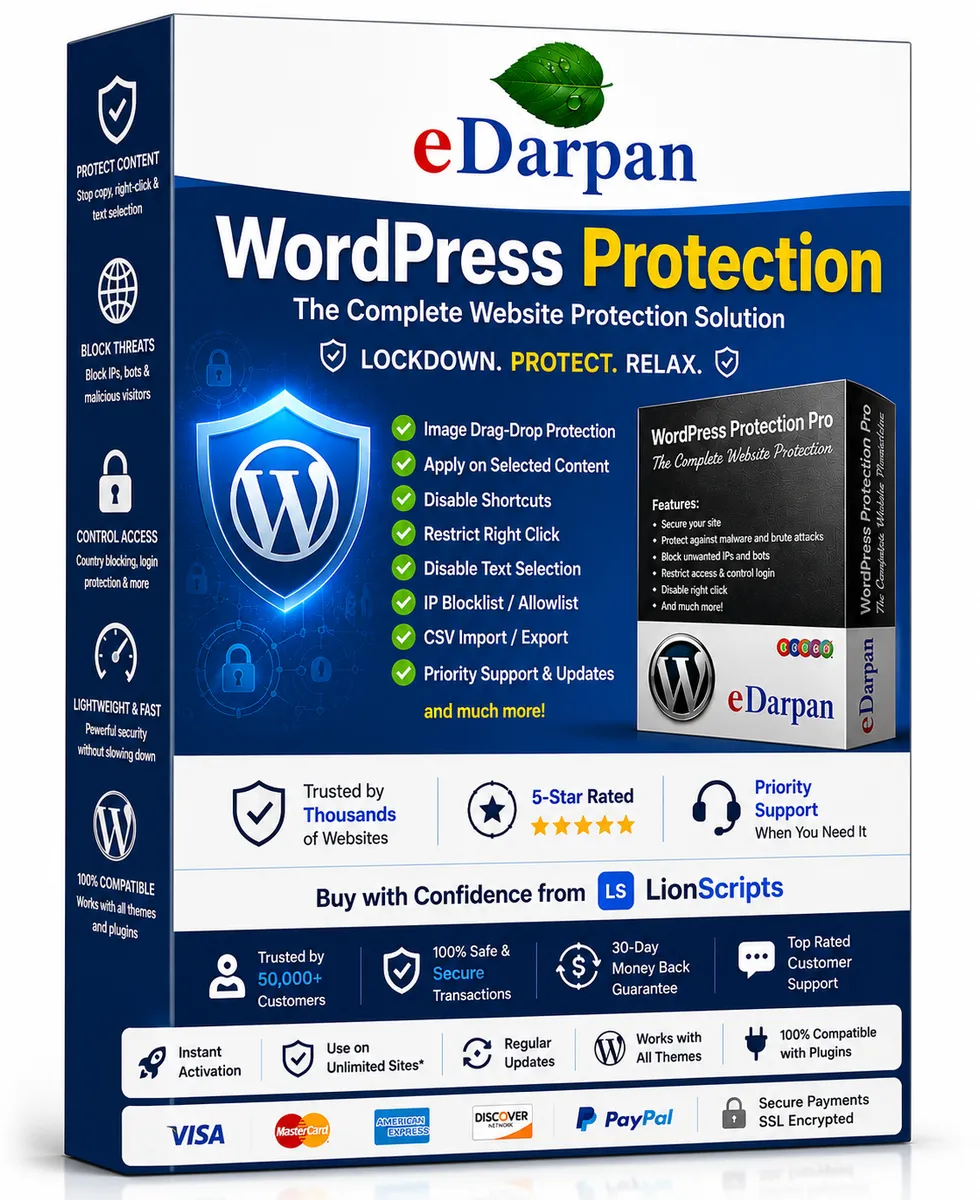
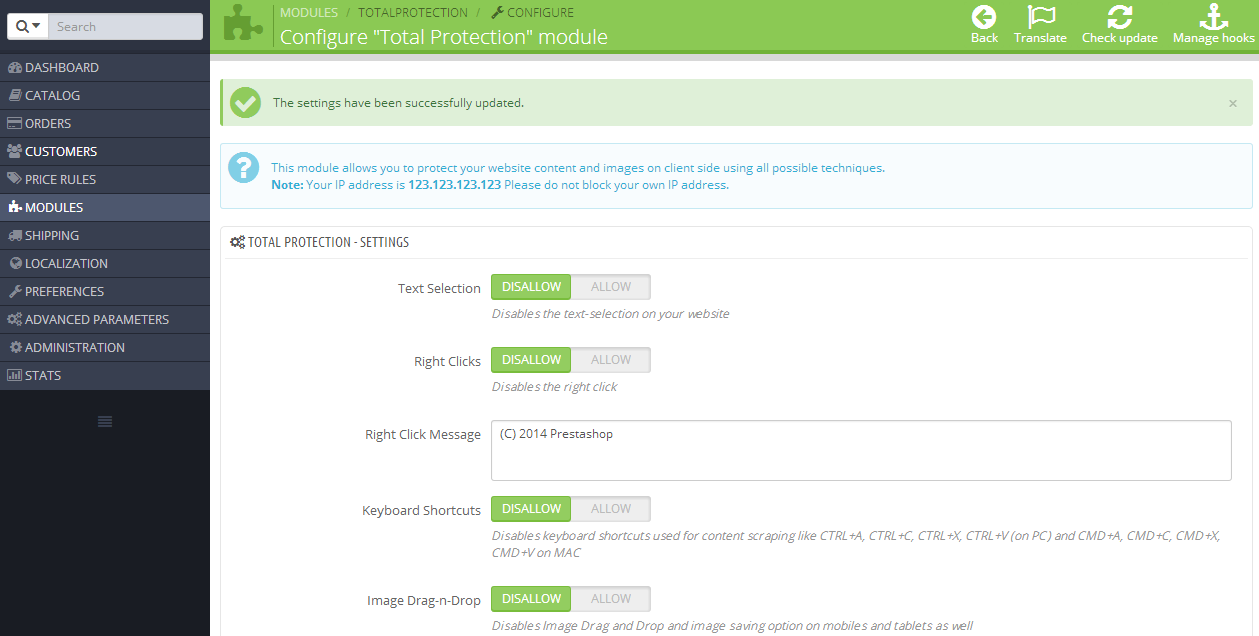
Rather than bolting together four separate tools, many store owners consolidate. A suite like eDarpan WordPress Protection bundles firewall, monitoring, and hardening for WordPress and WooCommerce, while SiteGuard Pro focuses on server-level protection for teams that manage their own hosting. If you run a store on another platform, there are parallels — Prestashop Total Protection Pro covers the same ground for PrestaShop shops.
Firewall and Protection Tools Compared
There's no single right answer here; the best choice depends on your platform, budget, and how much you want to manage yourself. Here's how the main options stack up on the criteria that matter for stopping takeovers.
Cover image: Innovate Maryland Emerging Technology Center by MDGovpics, licensed under BY 2.0 via Openverse.