Every WordPress plugin you install is a promise. The developer promises to keep it secure, patch bugs, and stay compatible as WordPress evolves. But promises break quietly. A plugin that hasn't shipped an update in 18 months isn't just "stable" — it may be abandoned code sitting one CVE away from becoming your site's biggest liability.
Here's the number that should stop you cold: according to WordPress vulnerability trackers, more than 90% of exploited WordPress vulnerabilities in a given year trace back to plugins, not the core software. And a significant chunk of those live in plugins that were technically "available" in the repository but had long since stopped being actively maintained. The install button doesn't warn you about any of that.
This guide walks you through exactly how to vet a WordPress plugin before installing by reading its update history like a detective reads a case file. You'll learn what the changelog is really telling you, how to spot an abandoned plugin from the metadata alone, how to compare two competing plugins on maintenance signals, and a repeatable checklist you can run in under ten minutes.
Key Takeaways
- A plugin's update cadence matters more than its total download count — regular small releases signal an active maintainer.
- Check the "Tested up to" version against the current WordPress release; a gap of two or more major versions is a red flag.
- Read the last 5–10 changelog entries to distinguish real security work from cosmetic version bumps.
- Support forum response times reveal whether the developer is actually present or has quietly walked away.
- Cross-reference the plugin against public vulnerability databases before you trust it near your data.
- For anything touching security or payments, prefer plugins with a clear commercial owner and support SLA over anonymous free listings.
Why Update History Is the Single Best Signal of Plugin Health
You can't read a plugin's source code before installing it — well, most people can't and won't. But you can read the trail the developer leaves behind. Update history is a public, timestamped record of whether someone is home.
Think about what a healthy plugin looks like over 24 months. It gets a handful of feature releases, several bug-fix patches, and at least one or two "tested up to" bumps to match new WordPress core versions. That rhythm tells you the maintainer is watching, responding, and invested.
An unhealthy plugin looks different. One big release, then silence. Or a version number that jumps from 2.1 to 2.4 with changelog entries that just say "minor fixes" and nothing else. Vagueness in a changelog is often a sign that nobody is really steering the ship anymore.
What "abandoned" actually means
A plugin is functionally abandoned when the maintainer stops responding to security disclosures and compatibility breaks. The WordPress.org repository will sometimes flag or close listings, but that happens late — often months after the developer has already moved on. By then, thousands of sites are running code with a known hole in it.
The same discipline you'd apply to vetting AI agents before giving them access to your data applies here: assume nothing based on the marketing, and verify everything based on behavior over time.
Where to Find a Plugin's Update History (Step by Step)
Before you click install, spend ten minutes gathering evidence. Here's exactly where to look and what each source reveals.
- Open the plugin's WordPress.org page. Go to
wordpress.org/plugins/<plugin-slug>/. This is your primary source for free plugins. - Click the "Development" tab. Then open the changelog. This is the raw release history with dates and version notes.
- Check the sidebar metadata. Note four values: Last updated, Active installations, Tested up to, and Requires WordPress version.
- Open the "Advanced View" at the bottom of the page. This shows the version download stats and the full list of previous releases you can download. A long list of dated releases is a good sign.
- Visit the support forum tab. Sort by recent threads and see how many have a reply from the developer or a "resolved" tag.
- Cross-reference the reviews. Filter to 1- and 2-star reviews from the last six months. Recent complaints about broken functionality after a WordPress update are a strong warning.
- For premium plugins, check the vendor's changelog page and release notes directly. A reputable commercial vendor publishes dated release notes; a curated marketplace like the WordPress plugins category on LionScripts lists version details so you're not buying blind.
Reading the "Last updated" date correctly
"Last updated 3 weeks ago" is reassuring. "Last updated 1 year ago" is not automatically fatal, but it demands scrutiny. Some small, single-purpose plugins genuinely don't need frequent updates. A plugin that only adds a shortcode might legitimately go quiet.
But a plugin that touches security, forms, payments, or user data and hasn't been updated in a year? Walk away. The attack surface is too large to trust to a silent maintainer.
A Worked Example: Vetting Two Contact Form Plugins
Let's make this concrete. Say you need a contact form plugin and you've shortlisted two candidates. Both have solid star ratings. Here's the ten-minute audit.
Plugin A shows: last updated 8 days ago, 400,000 active installs, tested up to the current WordPress version, and 47 releases over three years. The changelog for the last five versions reads:
3.8.2— Fixed XSS vulnerability in the file upload field (reported by a named researcher)3.8.1— Compatibility fix for WordPress 6.63.8.0— Added reCAPTCHA v3 support3.7.4— Fixed PHP 8.2 deprecation notices3.7.3— Hardened nonce validation on form submission
Plugin B shows: last updated 14 months ago, 90,000 active installs, tested up to WordPress 6.2 (three major versions behind), and 6 releases over three years. The last five changelog entries all read some variation of "minor bug fixes" with no detail.
The download numbers alone might tempt you toward whichever "feels" more popular. But the maintenance signals are decisive. Plugin A actively finds and patches security issues, names its researchers, and keeps pace with core. Plugin B is coasting on old momentum and hasn't confirmed compatibility with three WordPress releases. In a security audit, Plugin A wins before you even test either one.
This is the same evidence-first mindset we recommend when you audit a WordPress security plugin before trusting it — behavior over branding, always.
The Maintenance Signals That Actually Predict Risk
Not every metric carries equal weight. Here's how the signals stack up, ranked from most to least predictive of future problems.
1. Update cadence over the last 12 months
The best single predictor. Count the releases in the past year. Three or more, with dated notes, means someone is actively maintaining. Zero means you're on your own if something breaks.
2. Compatibility gap ("Tested up to")
Subtract the plugin's tested version from the current WordPress version. A gap of zero or one major version is fine. Two or more means the developer hasn't validated against recent core changes, and PHP deprecations may already be breaking things silently.
3. Changelog specificity
Detailed entries that name vulnerabilities, PHP versions, and specific fixes indicate professional maintenance. Repeated vague "minor fixes" entries suggest either laziness or a maintainer who has checked out.
4. Support forum responsiveness
Open the support tab. If the last developer reply was six months ago and dozens of threads sit unanswered, treat the plugin as effectively unsupported regardless of what the marketing says.
5. Public vulnerability record
A plugin that has had vulnerabilities isn't automatically bad — everyone gets bugs. What matters is how fast they were patched. Check databases like WPScan or the Patchstack directory for the plugin's history and average time-to-patch.
Free Repository vs Premium vs Marketplace: A Comparison
Where you source a plugin changes what update guarantees you get. Here's how the three common channels compare on the factors that matter for long-term safety.
| Criteria | Free WP.org Repo | Premium Vendor | Curated Marketplace |
|---|---|---|---|
| Update guarantee | None (volunteer basis) | Tied to license/subscription | Vendor-backed with listing standards |
| Changelog visibility | Public, but quality varies | Usually detailed release notes | Version details on listing |
| Support responsiveness | Community forum, hit or miss | Direct support channel | Centralized support contact |
| Abandonment risk | High for niche plugins | Lower while licensed | Lower — vetted before listing |
| Accountability | Often anonymous author | Registered business | Identified vendor + platform |
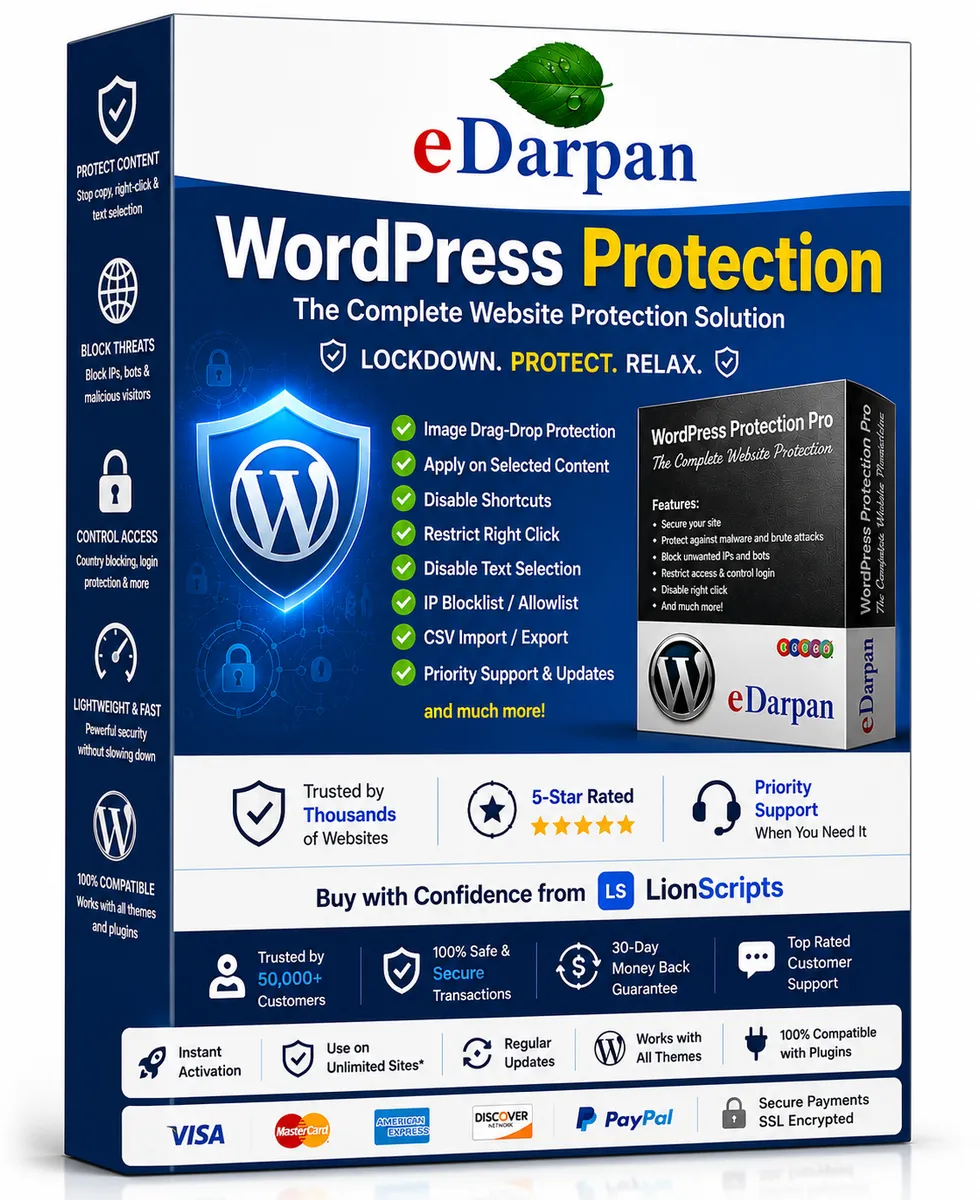
None of these channels is automatically "correct." A well-maintained free plugin can beat a neglected paid one. But when the plugin touches security, e-commerce, or user data, the accountability and support of a commercial source usually pays for itself. Products like eDarpan WordPress Protection and SiteGuard Pro come from an identified vendor with published release notes, which removes the "is anyone still home?" question entirely.
Your 10-Minute Pre-Install Audit Checklist
Run this every time, before you click install. Copy it into a note and tick each box.
- Last updated within 90 days for anything security- or data-related, or within 12 months for simple utility plugins.
- "Tested up to" is within one major version of current WordPress core.
- At least three dated releases in the past 12 months.
- Recent changelog entries are specific, not just "bug fix
Cover image: Innovate Maryland Emerging Technology Center by MDGovpics, licensed under BY 2.0 via Openverse.