If you run a WordPress site, you are running the single most attacked piece of software on the public internet. WordPress powers roughly 43% of all websites, which makes it a target the way a bank vault is a target: not because it is uniquely weak, but because that is where the value sits. In 2025 we watched automated attack traffic climb sharply, and the pattern going into 2026 is even less forgiving. Bots now chain vulnerability scanning, credential stuffing, and payload delivery in a single automated pipeline, often testing a freshly disclosed plugin flaw within hours of the CVE going public.
Here is the surprising part. The overwhelming majority of successful WordPress compromises still do not involve a zero-day. They involve a known vulnerability in an outdated plugin, a reused admin password, or an xmlrpc.php endpoint left wide open. Wordfence's threat data year after year tells the same story: plugins and weak authentication account for the lion's share of breaches. The attackers are sophisticated, but they win with the basics because most site owners never close the basic gaps.
This guide is a practical, opinionated walkthrough of WordPress security hardening for 2026. I have run these steps on client sites and my own, and I will tell you which measures actually move the needle, which are theater, and what the honest tradeoffs are. You will finish with a layered defense you can implement this weekend.
Key Takeaways
- Patch fast or lose. Most 2026 breaches exploit known plugin flaws within 24-72 hours of disclosure. Automated updates for trusted plugins are worth the small risk.
- Kill the easy doors first. Disable
xmlrpc.php, enforce 2FA on all admin accounts, and rename or protectwp-login.php.- Block attackers at the edge. IP-level and rate-limit rules stop credential stuffing before it touches your database.
- Audit your plugins ruthlessly. Every plugin is attack surface. Remove what you do not use and vet what you keep.
- Back up with a tested restore plan. A backup you have never restored is a hope, not a plan.
- Layer your defenses. No single tool is enough. Combine host, application, and network controls.
Understand the 2026 WordPress Attack Surface
Before you harden anything, know what you are defending against. WordPress attacks in 2026 cluster into a handful of repeatable categories, and each one maps to a specific control.
- Automated vulnerability scanning. Bots crawl the web fingerprinting plugin versions, then fire exploits at anything matching a known CVE. Speed of patching is your defense.
- Credential stuffing and brute force. Attackers replay leaked username-password pairs against
wp-login.phpand the REST API. Rate limiting and 2FA are your defense. - Supply chain and plugin abandonment. A plugin author stops updating, a vulnerability surfaces, and 200,000 sites stay exposed for months. Plugin hygiene is your defense.
- XML-RPC amplification. The
xmlrpc.phpendpoint allows multicall requests that let one HTTP call attempt hundreds of logins. Disabling it is your defense. - Malicious file uploads and web shells. Once in, attackers drop PHP shells in
wp-content/uploads. File integrity monitoring is your defense.
What has genuinely changed for 2026 is the automation layer. AI-assisted tooling now lets low-skill attackers weaponize a disclosed flaw quickly, and it lets them adapt payloads to evade naive signature matching. If you want to understand how that same tooling reshapes secure coding, our piece on vetting AI-generated code before shipping covers the developer side of this shift.
Lock Down Authentication and Login
Authentication is where most sites lose. The good news is that it is also the cheapest area to fix. Do these in order.
1. Enforce two-factor authentication on every admin
Not just your account. Every user with edit, publish, or administrator capability. A single editor with a reused password is a full compromise waiting to happen. Use a TOTP-based method rather than SMS, since SIM-swap attacks defeat SMS routinely.
2. Rename or protect the login URL
Moving wp-login.php to something like /secure-entry-4821 will not stop a determined attacker, but it eliminates 90%+ of dumb bot traffic that only hits the default path. It is security by obscurity, and obscurity as one layer is fine.
3. Add server-side rate limiting
Limit login attempts to, say, five per IP per fifteen minutes, then lock out escalating durations. This is the difference between a bot testing 10,000 passwords overnight and a bot getting banned after five.
4. Disable XML-RPC unless you truly need it
Most modern setups do not use xmlrpc.php. Disable it at the server level with a rule like:
<Files xmlrpc.php> Require all denied </Files>
If you use the Jetpack mobile app or certain remote publishing tools, whitelist the specific IPs instead of leaving the endpoint fully open.
A worked example
Say your access log shows 4,200 hits to wp-login.php and 1,800 POSTs to xmlrpc.php over 24 hours, from 340 distinct IPs. After you rename the login path, deny XML-RPC, and add rate limiting, a realistic outcome is login hits dropping to under 50 per day (the few bots that guessed the new path get rate-limited), and XML-RPC traffic returning a flat 403. You have just removed roughly 6,000 daily attack attempts with three changes, no plugin bloat, and zero cost. For a deeper audit of authentication weaknesses in the plugins themselves, see our guide on auditing WordPress plugins for auth bypass vulnerabilities.
Block Attackers at the Network Edge
The strongest place to stop an attack is before it consumes any PHP or database resources. Edge blocking means rejecting requests based on IP, geography, request rate, or behavior signature at the earliest possible point.
There are two broad approaches, and most robust setups use both:
- IP-based blocking for known-bad addresses, abusive ranges, or geographies you never serve. If your business only operates in three countries, blocking traffic from a dozen high-abuse regions cuts noise dramatically.
- Behavioral rate limiting that watches request patterns and throttles anything that looks automated, regardless of source IP.
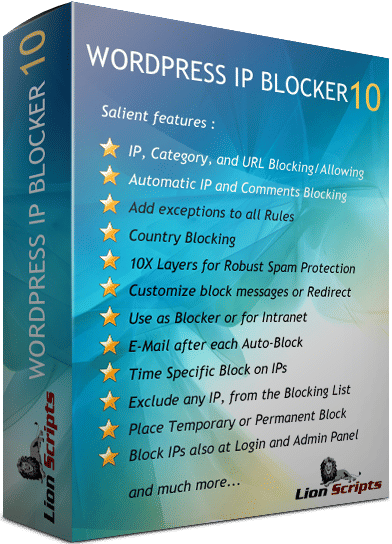
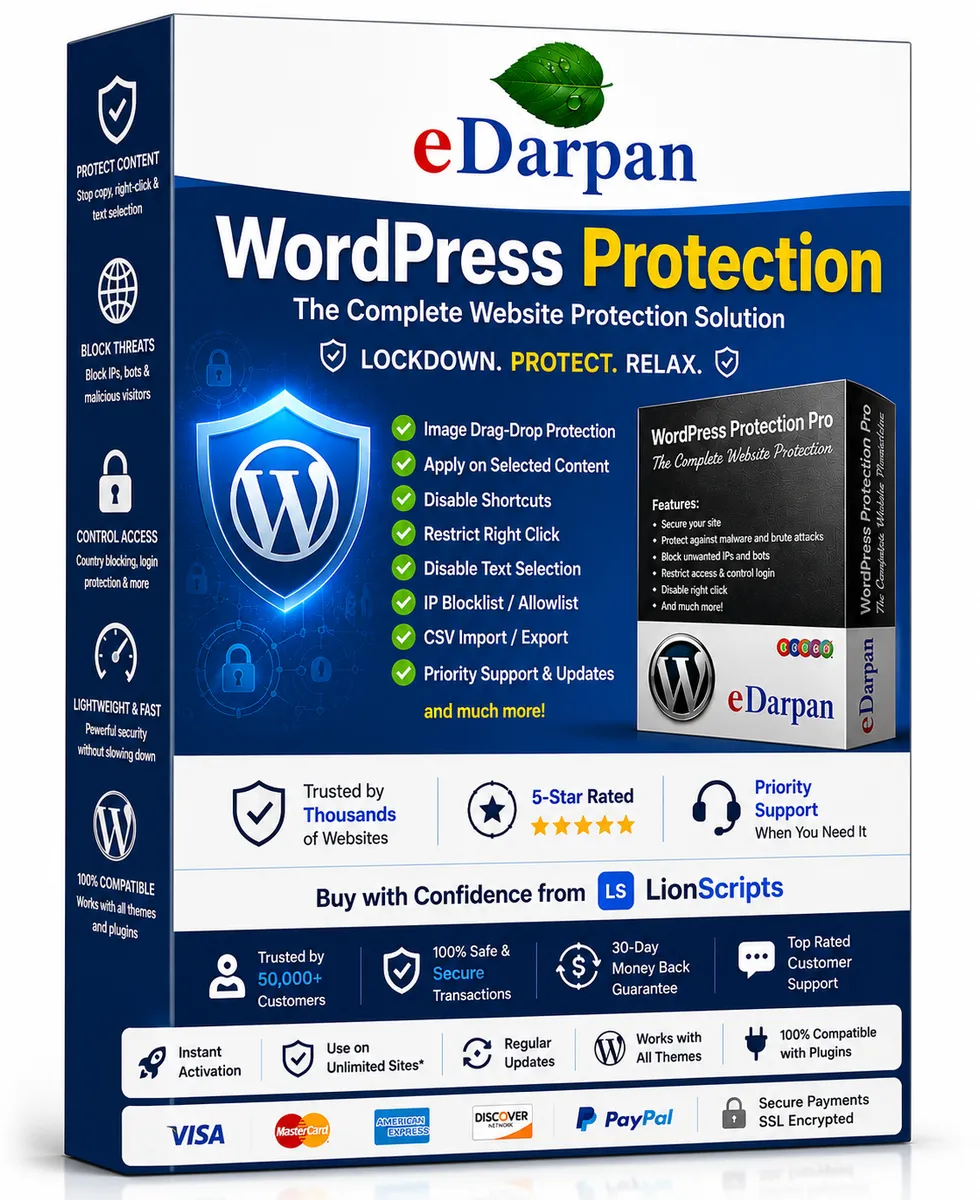
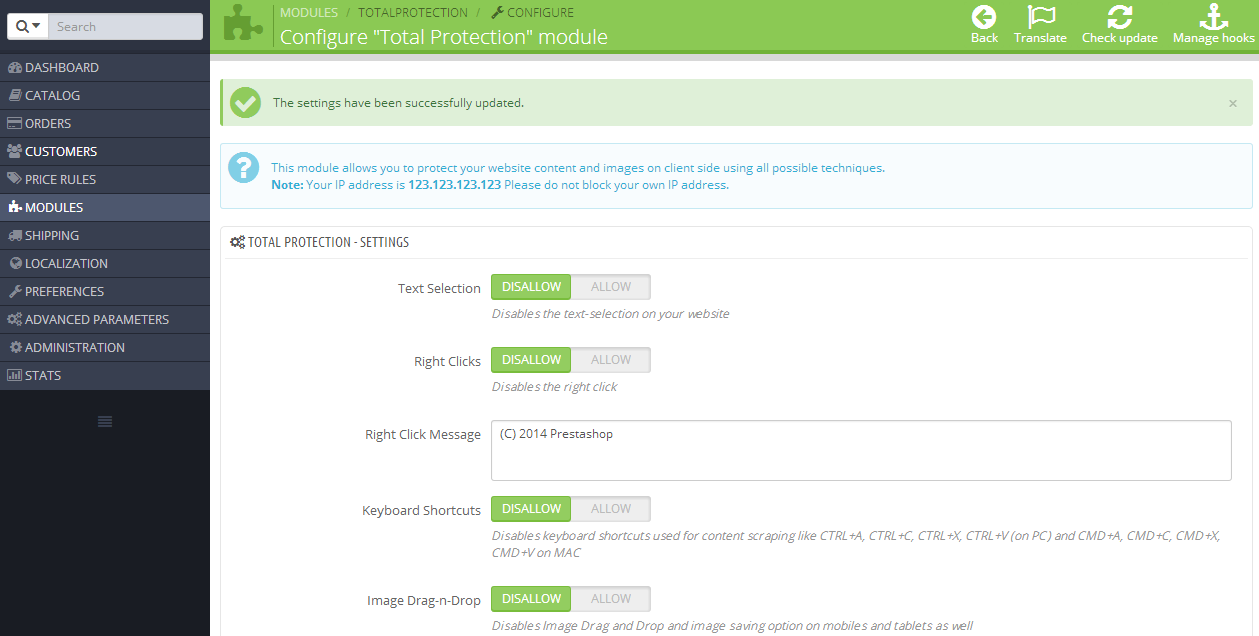
For granular IP control specifically, a tool like WordPress IP Blocker Pro lets you build allow and deny lists, block by country, and stop repeat offenders without wading through server config files. For teams that want a broader application-layer shield, eDarpan WordPress Protection bundles login hardening, firewall rules, and malware scanning into one plugin. If your hosting stack is non-WordPress or you manage several platforms, SiteGuard Pro and the wider WordPress plugins category are worth browsing.
When to block by country
Geo-blocking is blunt. Use it only when your legitimate audience genuinely does not include the region. An e-commerce store shipping only within India can safely block login and admin paths from everywhere else while keeping the public storefront globally accessible. A media site with worldwide readership should not geo-block, and should lean on rate limiting instead.
Keep Plugins and Core Ruthlessly Updated
Plugins are simultaneously WordPress's greatest strength and its largest attack surface. Every plugin is code you did not write, running with access to your database.
The three-question plugin audit
Run this on every plugin currently installed:
- Do I actually use this? If a feature is used once a year or never, delete the plugin, not just deactivate it. Deactivated plugin files still sit on disk and can still be exploited.
- Is it actively maintained? Check the "last updated" date. Anything untouched for over a year is a liability. Anything untouched for two years should go.
- How many people maintain it, and how big is the install base? A widely used plugin with an active team gets patched fast. A niche plugin from a single anonymous author does not.
Enable automatic updates for trusted plugins
There is a real tradeoff here. Auto-updates can occasionally break a site if an author ships a bad release. But in 2026, the window between disclosure and mass exploitation is often less than a day, and you will not be watching your dashboard at 3 a.m. On balance, enable auto-updates for reputable, high-install plugins and core, and pair it with a reliable backup so you can roll back a bad update in minutes.
Speaking of rollback, choosing backup software with a solid restore story matters more than most people think. Our guide to choosing backup software with a perpetual license breaks down what to look for.
Compare Your Hardening Options
Not every control fits every site. Here is an honest comparison of five common WordPress hardening approaches across the criteria that matter.
| Approach | Stops brute force | Stops known CVEs | Setup effort | Performance cost | Best for |
|---|---|---|---|---|---|
| IP blocking plugin | Strong | Weak | Low | Very low | Sites facing heavy bot/login abuse |
| Full security suite plugin | Strong | Moderate | Medium | Low to medium | Most self-managed sites |
| Cloud WAF (proxy) | Strong | Strong | Medium | Very low | High-traffic or high-value sites |