You set up two-factor authentication on your email, your bank, your work accounts, and your crypto exchange. You felt smart. Then the setup screen flashed a list of ten random codes, told you to "save these somewhere safe," and you clicked past it. Or worse, you screenshotted the codes to your camera roll, where they now sit next to a photo of your lunch and are automatically synced to a cloud account protected by the very password those codes were supposed to back up.
Here is the uncomfortable statistic: according to multiple support-industry surveys, account lockouts caused by lost 2FA devices are among the top three reasons people permanently lose access to their accounts, and most of those people had backup codes that they either never saved or saved so badly they couldn't find or trust them. A backup code you can't locate is identical to a backup code that never existed.
This article is the practical guide I wish someone had handed me years ago. You'll learn exactly what 2FA backup codes are, where to store them so they survive a lost phone, a house fire, or a hard drive crash, and how to avoid the two opposite failure modes: storing them so securely that you lock yourself out, and storing them so carelessly that an attacker walks right in.
Key Takeaways
- Backup codes are your last line of defense when you lose your phone or authenticator app. Treat them like the spare key to your entire digital life.
- Never store them only in one place, and never store them only on the device that also runs your authenticator. That single point of failure is how most lockouts happen.
- Use at least two storage locations of different types — for example, one encrypted digital copy plus one physical printout in a safe.
- Encrypt digital copies and keep them out of plain-text notes, unencrypted cloud drives, and your photo roll.
- Test one code per critical account after saving, so you know they actually work before disaster forces the issue.
- Regenerate and re-store codes whenever you use one, change devices, or suspect exposure.
What Are 2FA Backup Codes and Why They Matter
When you enable two-factor authentication, most services offer a set of one-time backup codes (sometimes called recovery codes). These are usually 8 to 12 single-use codes, each 8 to 16 characters long, that let you log in when your primary second factor is unavailable.
Your "primary second factor" is typically one of these:
- A time-based code from an authenticator app like Google Authenticator, Authy, or Aegis.
- A push notification to a trusted device.
- A hardware security key such as a YubiKey.
- An SMS text message (the weakest option, and one you should move away from).
Every one of those can vanish in an instant. You drop your phone in a lake. Your authenticator app data doesn't migrate to your new device. Your security key gets left in a hotel drawer three countries away. Backup codes exist precisely for those moments. Each code works once, then it's spent, which is why services give you a batch of them.
Think of them the way you think of backups in general: they only matter when everything else fails, and by then it's too late to create them. If this mindset resonates, our walkthrough on how to test your backup restore before disaster strikes makes the same argument for your files, and it applies word-for-word to your recovery codes.
The Two Ways People Lose Access (and How to Avoid Both)
There are exactly two failure modes, and they pull in opposite directions.
Failure mode 1: Too careless
You save the codes in a plain text file named codes.txt on your desktop, or paste them into a "Notes" app that syncs unencrypted, or email them to yourself. If an attacker ever gets into that device or that email, your backup codes hand them the keys. Backup codes bypass your second factor entirely, which is the whole point, so exposing them undoes all your 2FA effort.
Failure mode 2: Too locked down
You encrypt the codes with a passphrase you don't remember. You store them exclusively inside the password manager whose master password requires the very 2FA you're trying to recover. You print one copy and stash it somewhere so clever that future-you never finds it. Congratulations, you've built a vault with no door.
The fix for both is the same principle used in serious data protection: redundancy across independent systems. You want at least two copies, stored in two different ways, where compromising or losing one does not compromise or lose the other.
Where to Store 2FA Backup Codes: A Comparison of Your Options
Let's get concrete. Here are the realistic places you can put your 2FA backup codes, rated on the criteria that actually matter. I've used every one of these methods at some point, and the tradeoffs are real.
| Storage method | Security | Recoverability | Fire/theft resilience | Ease of use |
|---|---|---|---|---|
| Password manager (dedicated app) | High | High | Medium | High |
| Printed paper in a home safe | High | Medium | High (fireproof safe) | Medium |
| Encrypted USB drive | High | Medium | Low (single device) | Medium |
| Plain-text note / camera roll | Very low | High | Low | High |
| Bank safe deposit box | Very high | Low (slow access) | Very high | Low |
Notice that no single row scores high on everything. That's the point. The winning strategy is to combine two rows that cover each other's weaknesses. A dedicated password manager (high everyday recoverability) plus a printed copy in a fireproof home safe (high disaster resilience) is the combination I recommend for most people.
Why a dedicated password manager beats your browser
Storing codes in your browser's built-in password saver feels convenient, but browser vaults are easier to extract from a compromised machine and rarely support secure notes or encrypted attachments. A dedicated app gives you stronger encryption, cross-device sync you control, and a clean place for secure notes. If you're still relying on your browser, our guide on how to migrate from your browser's password manager to a dedicated app walks through the move step by step.
A Worked Example: Securing 12 Accounts Without Getting Locked Out
Abstract advice is easy to nod along to and hard to act on. So let's run real numbers.
Say you have 12 accounts with 2FA enabled: 3 email accounts, 2 banks, 1 crypto exchange, 1 password manager, 2 social media, 1 domain registrar, 1 cloud hosting panel, and your work SSO. Each gave you 10 backup codes. That's 120 codes total that need a home.
Here's the exact system I'd set up:
- Create a secure note per account in your password manager. Title each one clearly, like
Gmail (personal) — Backup Codes. Paste the 10 codes in. That's your everyday-access copy. - Print a single master sheet. One page with all 12 accounts and their codes, dated at the top. Fold it and put it in a fireproof, waterproof document safe at home.
- Make one off-site copy of the most critical accounts only. For the 3 highest-stakes accounts (your primary email, your password manager recovery, and your bank), print a second sheet and give it to a trusted family member in a sealed envelope, or store it in a safe deposit box.
- Encrypt any loose digital copies. If you keep a text file of codes on a USB stick, do not leave it in plain text. Wrap it in an encrypted archive with a strong passphrase you can actually remember or that lives in your password manager.
- Mark the primary email as the linchpin. If you lose access to your primary email, you can often recover most other accounts through it. That single account deserves the most redundant storage, including a hardware key if the service supports one.
Before this system: all 120 codes exist as a screenshot in your photo roll, synced to a cloud account that itself uses 2FA you can't recover. One lost phone equals total lockout.
After this system: lose your phone, your laptop, and your safe in a fire on the same day, and you can still recover your three most important accounts from the off-site copy, then cascade-recover the rest through your primary email. That is what defense in depth looks like for a human being, not a data center.
Encrypting Your Digital Copies the Right Way
If you're going to keep any codes in a file, encrypt them. Here's a clean, repeatable approach.
- Gather codes into a single plain-text file first, clearly labeled per account. Work on a device you trust and that isn't shared.
- Encrypt the file using a tool with strong, modern encryption. A password manager's secure-notes feature handles this transparently. For standalone files, an encrypted archive with AES-256 works well.
- Choose a passphrase you won't lose. Use a memorable multi-word phrase, and store a hint (not the phrase) somewhere separate. The classic mistake is encrypting so well that you can never open the file again.
- Securely delete the plain-text original. Don't just drag it to the trash. Empty the trash and, on drives that support it, use a secure-delete utility.
- Verify you can decrypt it immediately after, on a second device if possible. An encrypted file you've never successfully opened is a gamble.
For sharing an encrypted snippet securely between your own devices, an encrypted, self-destructing paste can be safer than email or chat. Tools like LionPaste let you move sensitive text between machines without leaving it sitting in an inbox forever. And if you're managing recovery for a whole team or family, keeping a broader toolkit handy — the kind bundled in a Webmaster Tools Suite — reduces how many loose utilities you juggle.
Physical Backups: Paper, Safes, and the Off-Site Copy
Digital copies are convenient, but paper has one enormous advantage: it can't be hacked remotely. A printed sheet in a locked box is immune to malware, phishing, and cloud breaches. Its weaknesses are physical: fire, water, and theft.
How to
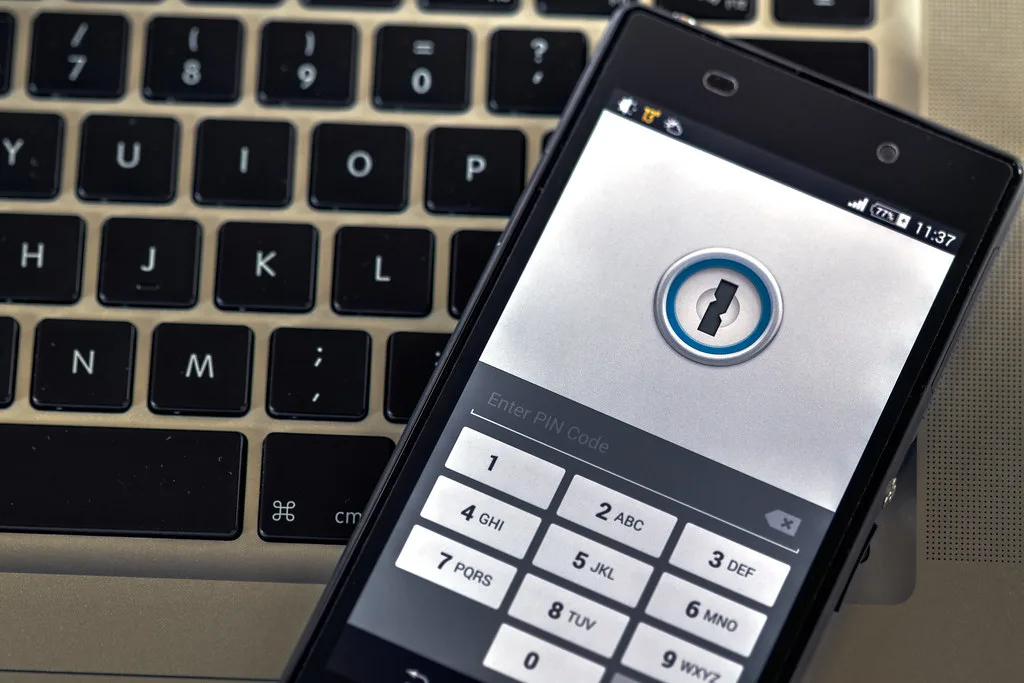
Cover image: Phone security by Ervins Strauhmanis, licensed under BY 2.0 via Openverse.