You installed a security plugin to make your WordPress site safer. But here's the uncomfortable truth: that plugin now has the keys to your entire kingdom. It can read every post, modify user roles, inject headers, make outbound network calls, and phone home with data you never agreed to share. A security plugin is one of the most privileged pieces of code on your site, and most people install it based on a five-star rating and a screenshot.
That trust is often misplaced. In 2024, researchers disclosed critical vulnerabilities in several popular WordPress security and firewall plugins, some with more than a million active installs. One authentication bypass affected a widely used login-protection plugin and let attackers waltz past the exact feature it was supposed to guard. The irony writes itself: the tool meant to protect you became the attack surface.
This guide walks you through how to audit WordPress security plugins before you trust them with your site. You'll learn what signals actually matter, how to read a plugin's code and permissions without being a developer, a repeatable vetting checklist, and a side-by-side comparison framework you can reuse for every future install.
Key Takeaways
- Reputation is a lagging indicator. Install count and star ratings tell you a plugin was popular, not that it's currently secure.
- Check the update cadence and disclosure history first. A plugin that patches fast and documents CVEs transparently is worth more than one that's never "had a problem."
- Audit what the plugin can access. Outbound requests, database writes, file permissions, and third-party API calls reveal the real risk.
- Test in staging, never live. Measure performance impact and false positives before a plugin touches production traffic.
- Prefer focused tools over bloated suites. A plugin that does one thing well is easier to audit than a monolith with 40 features.
- Document your decision. A simple scorecard makes re-evaluation trivial and keeps your stack accountable.
Why Security Plugins Deserve Extra Scrutiny
Most WordPress plugins ask for a narrow slice of access. A contact form touches email and a few database rows. A security plugin, by contrast, hooks into authentication, request handling, file integrity, and often the entire request lifecycle before WordPress even loads other plugins.
That broad reach is the point. But it means a flaw in a security plugin isn't just a bug, it's a privileged bug. When something with manage_options capabilities and root-level file access breaks, the blast radius is your whole site.
There are three failure modes to keep in mind:
- The plugin has its own vulnerability. Code that handles login attempts, IP filtering, or file scanning is a juicy target because attackers know it runs early and with high privileges.
- The plugin degrades performance. Aggressive scanning and per-request database writes can add 300 to 800 milliseconds to every page load, which quietly wrecks conversions and SEO.
- The plugin overreaches. Some phone home with site data, inject upsell nags, or bundle telemetry you never consented to.
If you want the broader strategic picture on defending a site, our companion guide on how to lock down a WordPress site against 2026's attack surge pairs well with this vetting process.
The Reputation Signals That Actually Matter
The WordPress plugin directory shows you install counts, ratings, and a "last updated" line. Those are useful, but people read them wrong. Here's how to interpret each signal like an auditor rather than a shopper.
Active installs: a floor, not a guarantee
A plugin with 500,000+ installs has survived contact with a lot of servers, which is mildly reassuring. But popularity also makes it a bigger target. High install counts should raise your expectations for update speed, not lower your guard.
Update cadence beats update recency
"Updated 3 days ago" looks good, but one recent update tells you nothing. Open the plugin's changelog and look at the last 12 months. You want to see a steady rhythm: bug fixes, compatibility bumps, and, crucially, security patches that are clearly labeled.
How the developer handles disclosure
Here is a counterintuitive truth: a plugin that has published CVEs is often safer than one that claims a spotless record. Published vulnerabilities mean researchers are looking, the team is responding, and fixes ship. Silence usually means nobody's checked.
Check wpscan.com or the CVE database for the plugin's history. A team that patches a reported flaw within a week is demonstrating exactly the behavior you want.
Support responsiveness
Skim the support forum. Are questions from the last month answered? Do the answers come from the developer or from frustrated users guessing? Abandoned support forums are the first sign of an abandoned plugin.
How to Audit a WordPress Security Plugin: A 9-Step Walkthrough
This is the repeatable process I run before any security plugin touches a production site. You don't need to be a PHP expert to do most of it.
- Download the plugin as a ZIP, don't install it yet. Grab the file from the official directory or the vendor. Unzip it locally so you can inspect the source before it ever runs.
- Read the main plugin file header. Open the primary
.phpfile and confirm the author, plugin URI, and version match what the listing claims. Mismatches are a red flag for repackaged or tampered code. - Grep for outbound network calls. Search the codebase for
wp_remote_get,wp_remote_post,curl_exec, andfile_get_contentspointed at URLs. Every external endpoint is a place your data might travel. Note what they're for. - Look for
eval,base64_decode, and obfuscation. Legitimate security plugins rarely need to decode and execute hidden strings. If you findeval(base64_decode(...)), stop. That pattern is a hallmark of malware, not a firewall. - Check the database footprint. Search for
$wpdb->queryandINSERT INTOstatements. A plugin that logs every request to a custom table can bloat your database by gigabytes a month on a busy site. - Review capability checks. Admin actions should be gated with
current_user_can()and protected bywp_verify_nonce(). If AJAX handlers or REST endpoints skip these, that's a real vulnerability, not a style preference. - Install on a staging clone. Never test on live. Spin up a staging copy, activate the plugin, and watch your
debug.logfor PHP warnings and deprecation notices. Noisy logs signal careless code. - Measure performance impact. Run a page-load test before and after activation using a tool like Query Monitor or GTmetrix. Record the delta in load time and database queries per page.
- Simulate a false positive. Try a legitimate action the plugin might block: a rapid series of logins, an admin file edit, a bulk upload. See whether it locks you out and how hard recovery is.
A worked example: auditing a login-security plugin
Say you're evaluating a login-protection plugin on a staging site with a baseline home page that loads in 1.2 seconds with 38 database queries. After activation, you re-run the test:
- Load time climbs to 1.9 seconds (a 58% increase).
- Queries jump to 71 per page, because the plugin writes a log row on every request.
- Grep reveals two outbound calls to an analytics endpoint you didn't expect.
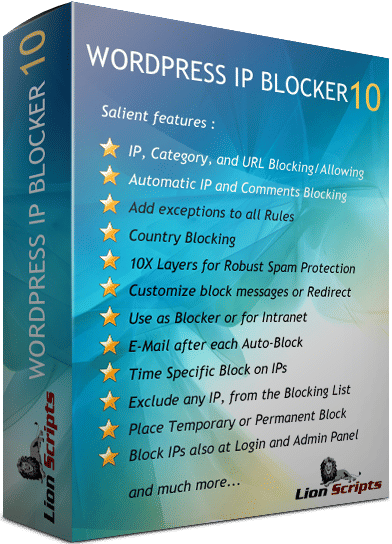
None of these are catastrophic on their own. But together they tell a story: this plugin is heavy, chatty, and adds real latency. If your only goal was rate-limiting failed logins, a focused tool would achieve the same protection with a fraction of the overhead. A purpose-built option like our WordPress IP Blocker Pro handles IP-level blocking without logging every legitimate visitor to the database.
Focused Tools vs. Bloated Suites
The biggest architectural decision is whether to run one giant "all-in-one" security suite or a small set of focused plugins. Both approaches are defensible, but they fail differently.
All-in-one suites are convenient and give you a single dashboard. The cost is auditability: when a plugin ships 40 features, you inherit the vulnerability surface of all 40, even the ones you never enable. Focused tools are easier to reason about, easier to replace, and easier to turn off when they cause problems.
| Criterion | All-in-One Suite | Focused Plugins | Server-Level (WAF/CDN) |
|---|---|---|---|
| Auditability | Hard (huge codebase) | Easy (small scope) | Moderate |
| Performance impact | High | Low to moderate | Very low |
| Attack surface | Large | Small per tool | Minimal on-site |
| Ease of replacement | Painful (lock-in) | Simple | Simple |
| Coverage breadth | Broad | Needs assembly | Network layer only |
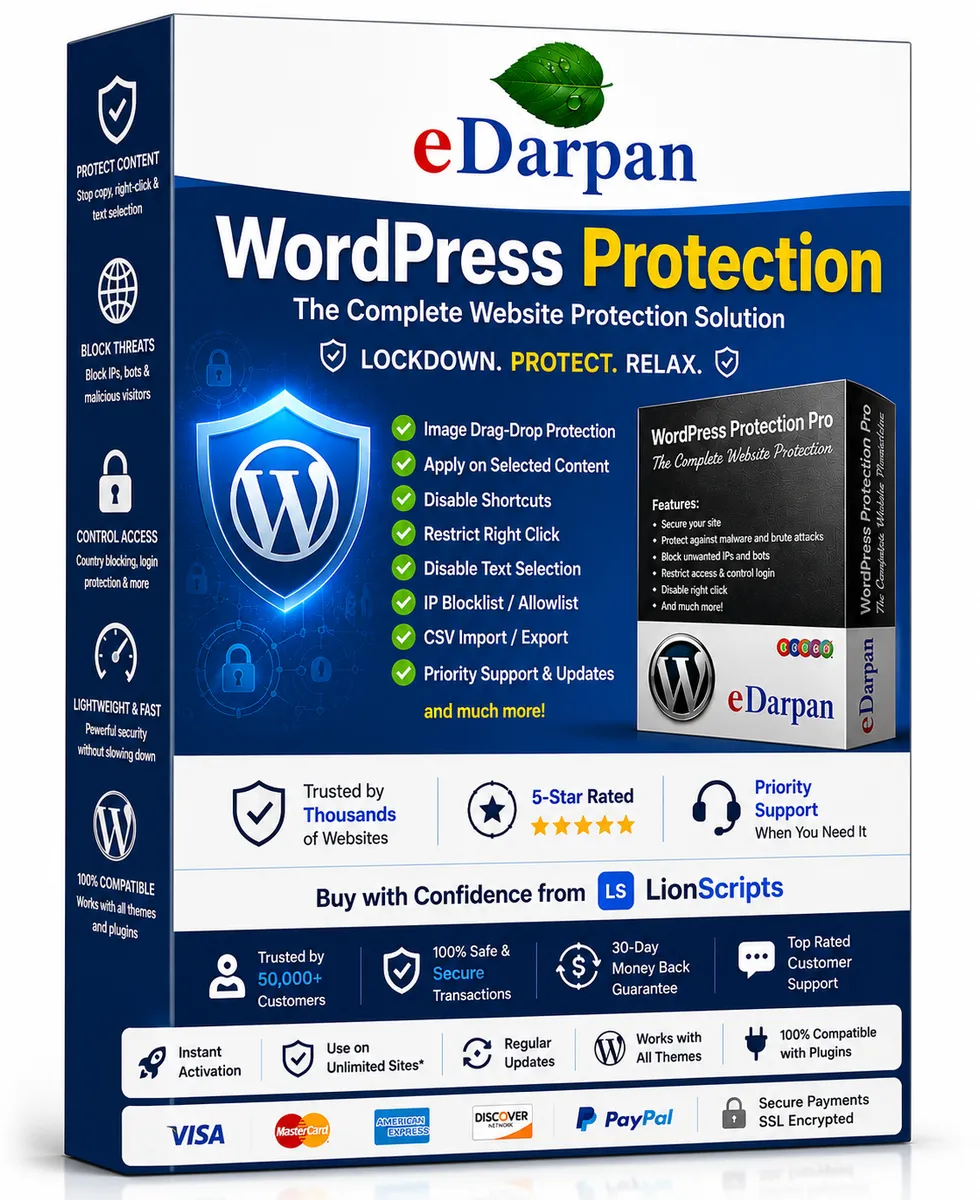
In practice, the strongest setups layer a lightweight on-site plugin with server or CDN-level filtering. For teams that want a maintained on-site layer without the bloat, eDarpan WordPress Protection and SiteGuard Pro are worth comparing on the same scorecard you'd use for any candidate. You can browse the full range under WordPress plugins to see how focused each option stays.
Reading Permissions and Data Flows Without Being a Developer
You don't need to compile anything to understand what a plugin does. A few practical techniques get you 80% of the insight.
Watch the network tab
Open your browser's developer tools, go to the Network tab, and load a page with the plugin active. Look for requests to domains you don't recognize. A security plugin calling out to an ad network or a random analytics domain is a signal worth investigating.
Cover image: Software value feedback loop by jakuza, licensed under BY-SA 2.0 via Openverse.