The average WordPress site runs 20 to 30 plugins. Each one is a chunk of third-party code with the ability to read your database, make outbound network calls, and touch every visitor's browser. Most site owners never audit a single one. They install, activate, and forget. That is how a survey form plugin ends up quietly shipping your customers' email addresses to a marketing endpoint in another country.
Data-harvesting is not the same as a classic hack. There is no defaced homepage, no ransom note. A well-behaved plugin can be siphoning first-party analytics, form submissions, or admin credentials for months while your Google Analytics dashboard looks perfectly normal. In 2023 and 2024, security researchers repeatedly found popular plugins with millions of installs phoning home with more data than their privacy policies disclosed. The problem is rarely malice. It is often lazy telemetry, an acquired plugin whose new owner monetized the user base, or a compromised update pushed through a hijacked developer account.
This guide walks you through a practical WordPress plugin security audit focused specifically on data exfiltration: how to find what your plugins collect, where they send it, and how to shut down the leaks without breaking your site. You will get a repeatable checklist, a worked example with real traffic captures, and a comparison of the tools I actually use.
Key Takeaways
- Every plugin is a supply-chain dependency. Audit the code, the network traffic, and the privacy policy, not just the star rating.
- Most data harvesting shows up as unexpected outbound HTTP requests. Monitoring egress is your single highest-signal check.
- Abandoned and recently-sold plugins are the highest-risk category. Check the changelog and ownership history before you trust one.
- A staging environment plus a proxy like mitmproxy lets you see exactly what leaves your server before real user data ever does.
- Combine automated scanning, manual code review, and continuous runtime monitoring. No single layer catches everything.
What Counts as a Data-Harvesting Vulnerability
Before you audit, define what you are hunting. A data-harvesting vulnerability is any plugin behavior that collects, transmits, or exposes data beyond what the user reasonably consented to. It falls into a few buckets.
- Undisclosed telemetry. The plugin sends usage stats, admin emails, site URLs, or installed-plugin lists to the developer without clear opt-in.
- Excessive data collection. A contact form that also captures IP, browser fingerprint, and referrer and forwards it to a third-party CRM you never configured.
- Insecure transmission. Data sent over plain
http://, or with API keys embedded in client-side JavaScript. - Third-party script injection. Plugins that load external JS from ad networks or "analytics partners" that can read form fields and cookies.
- Exposed endpoints. REST or AJAX routes that leak user data to unauthenticated requests.
The tricky part is that some of this is legitimate when disclosed and consented to, and hostile when hidden. Your audit is really about matching observed behavior against declared behavior.
Building a Safe Audit Environment
Never audit on production. You want to trigger and observe suspicious behavior without leaking real customer data or tipping off a plugin that fingerprints its environment. Set up a controlled sandbox first.
- Clone to staging. Use your host's staging feature or a local stack like LocalWP or a Docker
wordpress:php8.2-apacheimage. Import a sanitized database with fake user records. - Isolate the network. Run the site behind a proxy so every outbound request is logged. I use
mitmproxyon a dedicated port and point PHP's outbound traffic through it. - Snapshot before installing. Take a filesystem and database snapshot so you can diff exactly what a plugin changed after activation.
- Seed decoy data. Create fake admin emails like
audit-trap-2026@yourdomain.test. If that string ever appears in an outbound request, you have caught telemetry red-handed.
This same discipline of testing before trusting applies well beyond plugins. It is the same reason you should test that your backup actually restores before disaster hits rather than assuming it works.
Step-by-Step: How to Audit a Single Plugin
Here is the repeatable process I run on every new plugin before it touches a client site. Budget about 30 to 45 minutes per plugin the first time; it drops to 10 once you know the rhythm.
1. Vet the source and ownership
Open the plugin's WordPress.org page. Check the last updated date, the number of active installs, and the changelog. Anything not updated in over a year is a red flag. Then check for a recent ownership change; the changelog phrase "new maintainer" or a sudden addition of an "analytics" feature is a classic monetization signal.
2. Read the privacy policy and settings
Install on staging and open every settings tab. Look for a "usage tracking" or "improve this plugin" toggle. Note whether it defaults to on. Read the plugin's stated privacy policy and write down exactly what it claims to collect. This becomes your baseline for comparison.
3. Grep the code for outbound calls
From the plugin directory, search for the functions that make network requests:
grep -rn "wp_remote_post\|wp_remote_get" .grep -rn "curl_exec\|file_get_contents" .grep -rn "base64_decode\|eval(" .to catch obfuscation
For each hit, trace what data is passed to the request. If you see an admin email, a serialized array of installed plugins, or user records going out, flag it.
4. Capture live traffic
With mitmproxy running, activate the plugin, walk through its features, and submit a test form using your decoy data. Watch the request log. You are looking for any destination that is not your own server or an expected CDN. Search the captured bodies for your decoy string audit-trap-2026.
5. Inspect the frontend
Load a public page and open your browser's Network tab. Filter by third-party domains. Any script loaded from an ad or analytics domain you did not configure deserves scrutiny. Check whether those scripts have access to form fields or cookies.
6. Test unauthenticated endpoints
List the plugin's REST routes at /wp-json/ and its admin-ajax.php actions. Hit each one logged out with curl and confirm none return user data or accept unauthenticated writes.
A Worked Example: Catching a Leaky Form Plugin
Let me show you what this looks like in practice. On a recent audit I had a client running a form plugin with 400,000+ installs. Google Analytics looked clean. The privacy policy claimed the plugin "does not collect personal data."
Here is what the audit found:
- Grep result: One
wp_remote_postcall tohttps://api.[vendor]-insights.com/v2/collect. Not mentioned anywhere in the docs. - Traffic capture: On form submission, the plugin sent a JSON payload containing the submitter's email, IP address, and the site's admin email to that endpoint. My decoy string
audit-trap-2026@yourdomain.testappeared verbatim in the request body. - Frequency: With roughly 1,200 form submissions per month on this site, that meant about 14,400 email addresses per year silently forwarded to an undisclosed third party. A clear GDPR problem.
The fix took 20 minutes: we replaced the plugin with a lighter alternative, blocked the vendor's collection domain at the server level, and filed a data-breach note for the client's records. The before/after was stark. Before: 14,400 records/year leaving the building. After: zero. Without a traffic capture, we would never have known, because the plugin's dashboard reported nothing unusual.
Tools for a WordPress Plugin Security Audit Compared
No single tool does everything. Here is how the main options stack up on the dimensions that matter for data-harvesting audits specifically.
| Tool / Approach | Detects outbound leaks | Detects vulnerable code | Runtime monitoring | Ease of use |
|---|---|---|---|---|
| Static code grep (manual) | Partial | Yes | No | Advanced |
| mitmproxy / traffic capture | Excellent | No | Yes (staging) | Moderate |
| WPScan vulnerability DB | No | Yes (known CVEs) | No | Easy |
| Server-side security suite | Partial | Yes | Yes | Easy |
| IP / egress firewall | Yes (blocks) | No | Yes | Easy |
The pattern is clear: static analysis finds the code, traffic capture proves the behavior, and a runtime layer catches what you missed and blocks it going forward. For that always-on protection layer, a hardened suite such as eDarpan WordPress Protection or the broader SiteGuard Pro handles the monitoring and blocking so you are not manually watching logs every day.
Hardening After the Audit
Finding a leak is only half the job. Once you know what a plugin does, you decide: keep, restrict, or replace. Here is how I lock things down.
Block known collection domains
If a plugin you need also phones home to a domain you do not want, block that domain at the firewall or via a WordPress-level rule, rather than removing a plugin you rely on. Egress control is the surgical option.
Restrict who can hit your site
A large share of endpoint-probing and credential-harvesting attempts come from a handful of abusive IP ranges. Blocking them at the edge cuts the noise dramatically. A dedicated tool like the WordPress IP Bl
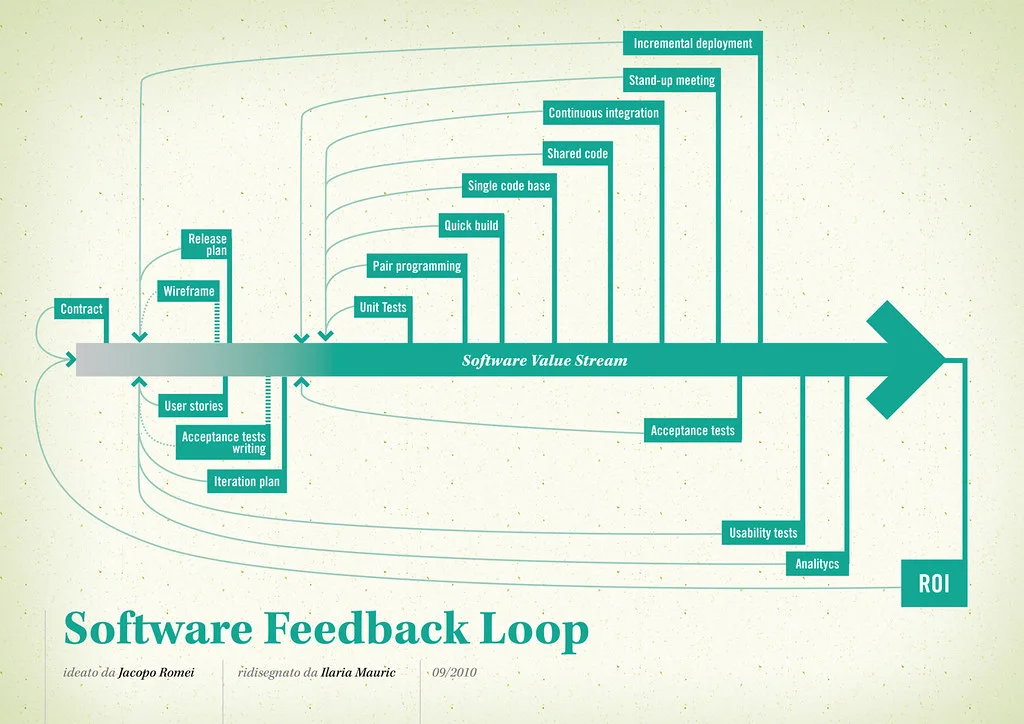
Cover image: Software value feedback loop by jakuza, licensed under BY-SA 2.0 via Openverse.