Here's a number that should make every WordPress site owner uncomfortable: in a typical year, security researchers disclose more than 5,000 new vulnerabilities in WordPress plugins and themes. The core CMS itself is remarkably well-audited. Your plugins are the soft underbelly, and they account for the overwhelming majority of the breaches I've cleaned up over the years.
The frustrating part is that most of these attacks are entirely preventable. The exploited vulnerability was usually public knowledge weeks or months before the compromise happened. The patch existed. Nobody applied it, because nobody was looking. A WordPress plugin vulnerability audit is the discipline of looking before an attacker does, and it's a lot less painful than the alternative.
In this guide I'll walk you through exactly how I audit a WordPress installation for plugin risk, the tools I actually reach for, a worked example with real numbers, and the ongoing habits that keep a site out of the incident log. This is the process I use on client sites, not a theoretical checklist.
Key Takeaways
- Plugins, not WordPress core, are responsible for the vast majority of site compromises. Audit them on a schedule, not after something breaks.
- Build an inventory first. You cannot secure plugins you don't know are installed, including the "temporary" ones someone activated two years ago.
- Cross-reference your plugin versions against public vulnerability databases like WPScan and the WordPress.org changelogs.
- Abandoned plugins (no updates in 12+ months) are a bigger risk than most people realize. Replace them, don't just hope.
- Layer defenses: patching, a firewall, IP-level blocking, and file integrity monitoring each catch what the others miss.
- Automate the boring parts. A quarterly manual audit plus continuous automated scanning is the practical sweet spot.
What a WordPress Plugin Vulnerability Audit Actually Is
A plugin vulnerability audit is a structured review of every plugin on your site to answer four questions: What is installed? What version is it? Are there known vulnerabilities in that version? And what is the blast radius if it gets exploited?
That last question matters more than people think. A vulnerable plugin on a static brochure site is a different level of urgency than the same plugin on a WooCommerce store processing customer payment data. Context changes priority.
The common vulnerability classes you'll be hunting for in plugins are worth knowing by name, because they show up in advisories constantly:
- SQL injection (SQLi): attacker manipulates database queries, often to dump user tables.
- Cross-site scripting (XSS): malicious scripts injected into pages, frequently through unsanitized form fields.
- Broken access control / privilege escalation: a subscriber-level account gaining admin rights. This one is devastating and depressingly common.
- Arbitrary file upload: the classic path to a web shell and full server compromise.
- CSRF (cross-site request forgery): tricking a logged-in admin into performing actions they didn't intend.
Step One: Build a Complete Plugin Inventory
You cannot audit what you cannot see. Before touching a scanner, list every plugin, its version, its status, and when it was last updated by the developer.
From the WordPress admin, go to Plugins → Installed Plugins. But don't stop there. Admins sometimes leave deactivated plugins on disk, and deactivated does not mean harmless. A vulnerable file that's still reachable over HTTP can be exploited even if the plugin isn't "active."
The command-line shortcut
If you have SSH access and WP-CLI installed, this gives you a clean export in seconds:
wp plugin list --fields=name,status,version,update --format=csv > plugin-audit.csv
Open that CSV in a spreadsheet and you have your audit worksheet. Add columns for known CVEs, last developer update, risk level, and action. Now you're working like an auditor instead of guessing.
A Worked Example: Auditing a Real 18-Plugin Site
Let me make this concrete. Say you inherit a small business site with 18 active plugins. You export the list and start filling in your worksheet. Here's what a realistic audit turns up:
- 3 plugins are on the latest version, actively maintained, no known issues. Green.
- 8 plugins are one or two minor versions behind. Low risk, but update them anyway.
- 4 plugins are several major versions behind and have documented vulnerabilities in the installed version. This is your priority list.
- 2 plugins haven't received a developer update in over two years. One was removed from the WordPress.org repository entirely, which is a major red flag.
- 1 plugin is a nulled premium plugin someone installed to avoid paying for a license. This is the single most dangerous item on the list.
That nulled plugin deserves special attention. Cracked plugins are a favorite delivery mechanism for backdoors, and you have no update path because you're not a legitimate license holder. I've seen exactly this scenario introduce a persistent admin backdoor that survived three separate malware cleanups. The fix is non-negotiable: remove it and buy the real thing. It's also a good reminder to verify software downloads and avoid fake installers in the first place.
Working through this 18-plugin list took roughly 90 minutes the first time. The four vulnerable plugins updated cleanly. The two abandoned ones got replaced with maintained alternatives. The nulled plugin was purchased legitimately. Total risk exposure dropped from "seven live problems" to zero known issues in an afternoon.
Step Two: Cross-Reference Against Vulnerability Databases
Now that you have versions, you need to know which of those versions are dangerous. You don't have to be a security researcher for this. The work has already been done and published.
- WPScan Vulnerability Database: the most comprehensive source specifically for WordPress. Search by plugin slug and it lists every known vulnerability with the affected version range and the version that fixed it.
- CVE / NVD (National Vulnerability Database): the broader, canonical source for tracking assigned CVE identifiers and severity scores.
- The plugin's own changelog on WordPress.org: look for entries like "security fix" or "hardening." Developers often mention security patches here even before a formal CVE is assigned.
- Patchstack and Wordfence Intelligence: both publish free, searchable vulnerability feeds that are excellent for cross-checking.
Here's the practical trick: for each plugin, compare your installed version number against the "fixed in" version listed in the advisory. If you're running 2.3.1 and the advisory says the issue was patched in 2.4.0, you're exposed. Update.
Comparing the Tools You'll Use to Audit and Protect
There's no single tool that does everything well, which is why layering matters. Here's how the main categories compare on the criteria I care about when auditing a site.
| Tool / Approach | Finds known CVEs | Blocks live attacks | Detects file changes | Setup effort | Best for |
|---|---|---|---|---|---|
| Manual database cross-check | Excellent | No | No | Medium | Periodic deep audits |
| WPScan (CLI/service) | Excellent | No | No | Medium | Automated version scanning |
| Firewall plugin (WAF) | Partial | Yes | Some | Low | Blocking exploit attempts |
| IP-level blocker | No | Yes | No | Low | Stopping repeat abusers and bots |
| File integrity monitor | No | No | Yes | Low | Catching successful breaches early |
Read that table as a shopping list, not a "pick one." A vulnerability scan tells you what's exploitable, a firewall blocks the attempts, an IP blocker cuts off the persistent attackers, and file monitoring catches anything that slips through. Each covers the others' blind spots.
Step Three: Layer Your Defenses Around What You Can't Patch Immediately
Sometimes you can't update right away. Maybe a plugin update breaks a critical page, or you're waiting on a staging test. In those windows, defensive layers buy you time.
Add a web application firewall
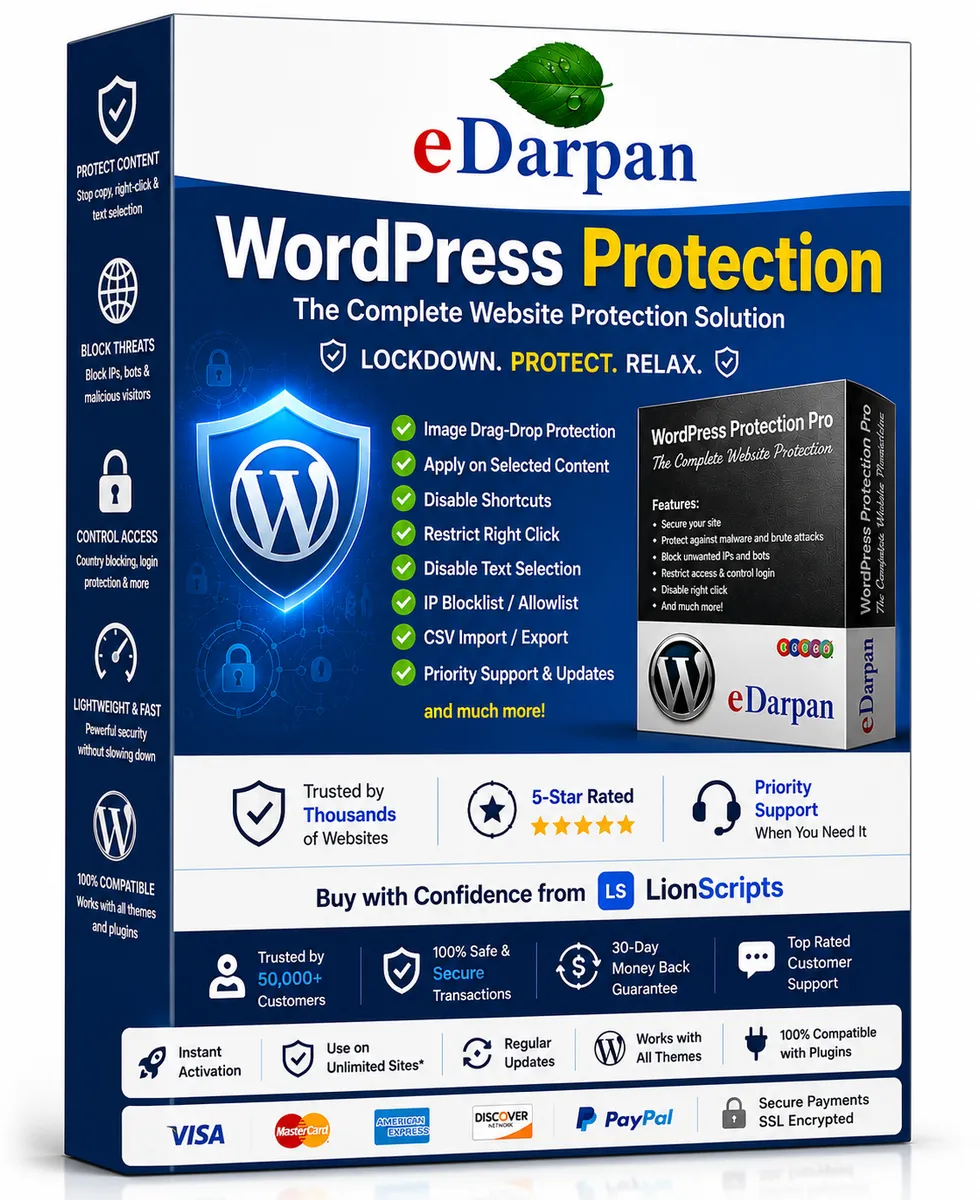
A WAF sits in front of your site and blocks requests that match known attack patterns, like SQL injection strings or malicious file uploads. It won't fix the underlying vulnerability, but it stops the common automated exploitation attempts that make up most of the traffic hitting a vulnerable plugin. A hardening-focused solution like eDarpan WordPress Protection is designed to close off exactly these attack surfaces, and it lives comfortably alongside your other WordPress plugins.
Block the attackers themselves
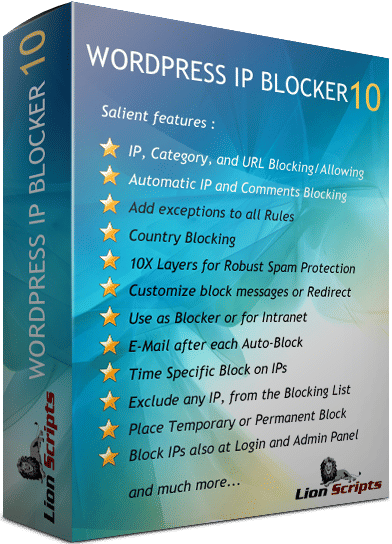
Most exploitation traffic comes from a relatively small pool of abusive IP addresses and bot networks probing thousands of sites. Cutting them off at the door reduces noise and risk dramatically. This is where a dedicated tool like WordPress IP Blocker Pro earns its place, letting you block by IP, range, or country and shut down the repeat offenders hammering your login page.
Monitor for successful breaches
Assume something will eventually get through and plan to detect it fast. File integrity monitoring alerts you when core or plugin files change unexpectedly, which is often the first sign of a web shell being planted. A broader hardening suite such as SiteGuard Pro combines several of these protective layers into one place, which cuts down on the plugin sprawl that itself bec
Cover image: Illinois.gov - Illinois Government News Network (IGNN) - Search the News Results by danxoneil, licensed under BY 2.0 via Openverse.