The average knowledge worker checks a communication app or switches tasks every three minutes, and after each interruption it takes around 23 minutes to fully re-engage with the original work. Do that math across a workday and the picture gets grim: you are effectively bleeding hours to a thousand tiny pulls on your attention. If you have ever ended a busy day feeling like you accomplished nothing, this is usually why.
Willpower alone is a losing strategy against that kind of pressure. This is where gamified focus apps come in. Instead of nagging you to concentrate, they turn deep work into a game with points, streaks, virtual worlds, and rewards. The idea sounds gimmicky until you actually try it and notice you just did 90 uninterrupted minutes because you did not want to kill a virtual tree.
In this guide I will break down how gamified focus apps actually work, compare the best options on the market, walk through a real setup you can copy, and point out the honest tradeoffs nobody mentions in the app store reviews. By the end you will know exactly which tool fits your brain and your budget.
Key Takeaways
- Gamification beats guilt. Streaks, rewards, and loss aversion are more sustainable motivators than sheer discipline for most people.
- Forest and Flora win on stickiness thanks to the plant-growing mechanic, while Focus Bear and Habitica are stronger for full-day routines.
- Loss aversion is the killer feature. Apps that let you "kill" progress by leaving the app early are measurably more effective at stopping phone-checking.
- Pair the app with a blocker. A focus timer without a distraction blocker is a fence with the gate open.
- Start with a 25-minute cycle, not a heroic 2-hour block. Small wins build the streak that keeps you coming back.
- Free tiers are genuinely usable for most people; pay only once you know the mechanic works for you.
What Are Gamified Focus Apps and Why Do They Work?
A gamified focus app is a productivity tool that applies game design principles, such as points, levels, streaks, virtual currency, and visual rewards, to the otherwise unrewarding act of concentrating. You set a timer, resist distraction, and the app gives you something satisfying in return.
The psychology behind them is well documented. Three mechanisms do the heavy lifting:
- Variable rewards. The same dopamine loop that makes slot machines and social feeds addictive gets redirected toward productive work.
- Loss aversion. People hate losing progress roughly twice as much as they enjoy gaining it. Apps that "punish" you for quitting early exploit this beautifully.
- Streak commitment. Once you have a 14-day streak, breaking it feels like a real loss, so you keep showing up.
The result is that focus becomes intrinsically motivating instead of a chore you force through. That shift is the whole ballgame.
Who benefits most?
These apps are especially effective for people with ADHD, chronic procrastinators, students facing exam blocks, and remote workers with no office structure. If you are already a laser-focused machine, you may not need them. Everyone else stands to gain a meaningful chunk of their day back.
The Best Gamified Focus Apps Compared
I have used every app below for at least two weeks of real work, not a quick demo. Here is how the leading options stack up on the criteria that actually matter day to day.
| App | Core Mechanic | Best For | Platforms | Free Tier | Paid Price |
|---|---|---|---|---|---|
| Forest | Grow a virtual tree; leave early and it dies | Phone-addiction breakers | iOS, Android, Chrome | Limited (mobile) | $3.99 one-time |
| Flora | Grow plants; optional real money stakes | Accountability with friends | iOS only | Generous | Free + optional stakes |
| Habitica | Full RPG: XP, gold, gear, party quests | Habit + task gamers | iOS, Android, Web | Full app free | $5/mo subscription |
| Focus Bear | Guided routines that block distractions | ADHD, full-day structure | iOS, Android, Win, Mac | Trial only | ~$5/mo |
| Finch | Raise a pet bird via self-care tasks | Gentle motivation, wellness | iOS, Android | Generous | $9.99/mo premium |
Forest: the gold standard for loss aversion
Forest is the app most people think of first, and for good reason. You plant a virtual tree at the start of a focus session. If you leave the app to check your phone, the tree withers and dies. Over time you build a forest that visually represents your focused hours.
The genius is that Forest also partners with a real tree-planting organization, so accumulated in-app coins can fund real trees. That turns a private habit into something that feels genuinely meaningful. At a one-time $3.99 on iOS, it is the best value on this list.
Flora: same idea, social stakes
Flora borrows the plant mechanic but adds two twists: you can grow plants together with friends in a shared session, and you can put real money on the line. Break your commitment and you actually get charged, with the money going to plant real trees. If financial loss aversion is your motivator, Flora is unmatched.
Habitica: for people who love RPGs
Habitica turns your entire life into a role-playing game. Your to-dos, habits, and daily routines earn experience points and gold. You level up a character, buy armor, and can join parties where slacking off literally damages your teammates. It is the most gamified option here, and the accountability of a party is powerful. It also pairs naturally with a dedicated task manager, which I cover in our breakdown of the best to-do list apps and Todoist alternatives.
Focus Bear and Finch: routine and wellness
Focus Bear is less about a single timer and more about scaffolding your entire day, from a guided morning routine to app-blocking during work blocks. Finch takes the softest approach, rewarding self-care and small wins by growing a cute pet bird. If harsh loss aversion makes you anxious, Finch is the kind option.
A Real Worked Example: Rescuing a Distracted Workday
Abstract advice is easy to ignore, so here is a concrete before-and-after from my own tracking.
Before: On a typical Tuesday I logged my screen time and interruptions. Over an 8-hour workday I picked up my phone 74 times and switched tabs constantly. My screen-time report showed 2 hours 40 minutes on non-work apps. Realistic deep-work total: maybe 2.5 focused hours out of 8.
The intervention: I set up Forest with the following structure.
- Open Forest and set the timer to 25 minutes (a classic Pomodoro block).
- Choose a tree species tied to that session; rarer trees unlock with longer streaks, which adds motivation.
- Enable the "kill the tree if you leave" allowlist so only approved apps are permitted mid-session.
- Plant the tree and start working. No phone touching until the timer ends.
- Take a 5-minute break, then repeat. After four cycles, take a longer 20-minute break.
After (two weeks later): Phone pickups during work hours dropped to 22 per day. Non-work screen time fell to 55 minutes. Deep-work time climbed to roughly 5 hours. That is a 100 percent increase in focused output with zero change in willpower, just a changed environment and a tree I did not want to kill.
The lesson: you did not become more disciplined. You changed the game so distraction had a visible cost.
The Missing Piece: Pairing Focus Apps with Blockers
Here is the honest limitation nobody advertises. Most gamified focus apps rely on you not leaving them. On mobile, that works because leaving the app kills your tree. On desktop, it is far weaker. You can happily doom-scroll in another browser tab while your Forest timer runs in a pinned tab, completely undetected.
So the single biggest upgrade you can make is to combine a focus timer with a genuine blocker. Think of the focus app as motivation and the blocker as enforcement.
- Site and app blockers (Cold Turkey, Freedom, or built-in Screen Time) physically prevent access during work blocks.
- Browser-level controls stop the "just one quick look" tab switch.
- For self-hosted or website work, a clean toolset removes the temptation to keep poking at analytics.
If your distraction often comes from constantly checking your own site's stats and dashboards, consolidating those tasks with something like the Webmaster Tools Suite means fewer scattered tabs and fewer excuses to wander. Batching that kind of work into a single scheduled block is far more focus-friendly than checking it 12 times a day.
The "environment beats willpower" rule
Every productivity researcher worth reading agrees on one thing: the best way to resist a distraction is to make it inconvenient, not to fight the urge each time. A gamified app supplies the carrot. A blocker supplies the wall. Use both.
How to Choose the Right Gamified Focus App for You
Do not download all five and hope. Match the app to your personality using this quick decision guide.
- You get addicted to phone-checking: Start with Forest. The tree-death mechanic targets exactly this behavior.
- You are motivated by money or peer pressure: Use Flora with real stakes and a study buddy.
- You love games and want your whole life gamified: Go with Habitica and join an active party.
- You have ADHD and struggle to start or transition tasks: Try Focus
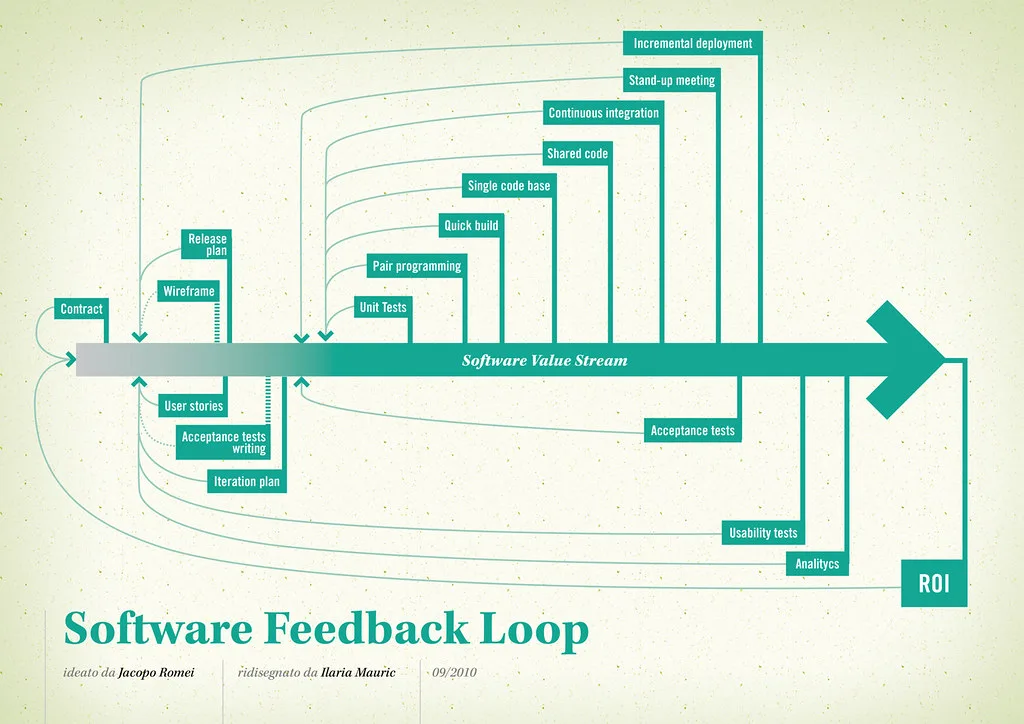
Cover image: Software value feedback loop by jakuza, licensed under BY-SA 2.0 via Openverse.